People Use It Wrong)
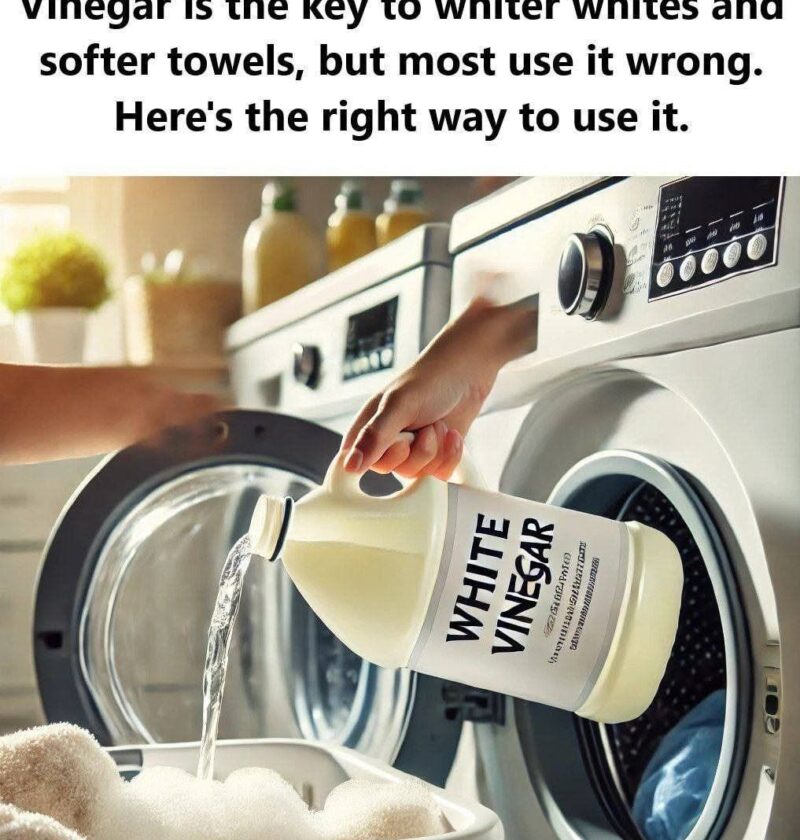
White vinegar is a popular laundry helper because it can reduce odors, soften fabrics, and help remove some detergent residue. However, it is not a true bleach and will not magically turn yellowed or heavily stained clothes bright white. Used correctly, it can be a useful addition to your laundry routine.
Why vinegar can help your laundry
1. Softer towels without fabric softener
Fabric softeners can leave a coating on towels that reduces absorbency over time. Vinegar can help remove some residue, allowing towels to feel fresher.
2. Helps reduce odors
Vinegar’s acidity can help neutralize some odor-causing residues from:
- Sweat
- Mildew smells
- Detergent buildup
3. Helps remove detergent residue
Too much detergent can leave fabrics feeling stiff or dull. Vinegar may help rinse away some of that buildup.
4. Helps keep whites looking fresher
By reducing residue and buildup, vinegar may help white fabrics look cleaner. For deep stains or yellowing, a proper stain remover or oxygen bleach is usually more effective.
The Right Way to Use Vinegar in Laundry
As a fabric softener alternative
- Add ½ to 1 cup of white distilled vinegar to the fabric softener dispenser.
- Run your wash cycle as normal.
The vinegar smell should not remain after rinsing and drying.
For musty towels
- Wash towels with detergent as usual.
- Add vinegar during the rinse cycle.
- Dry towels completely to prevent mildew.
Common Mistakes to Avoid
❌ Do not mix vinegar with chlorine bleach
This can create dangerous chlorine gas.
❌ Do not pour vinegar directly onto delicate fabrics without testing
Some materials may be sensitive to acids.
❌ Do not overuse vinegar
Frequent heavy use may not be necessary and could affect some washing machine components over time, especially rubber seals in certain machines.
❌ Do not expect vinegar to replace detergent
Vinegar helps with rinsing and odors; it does not remove all dirt, oils, and stains by itself