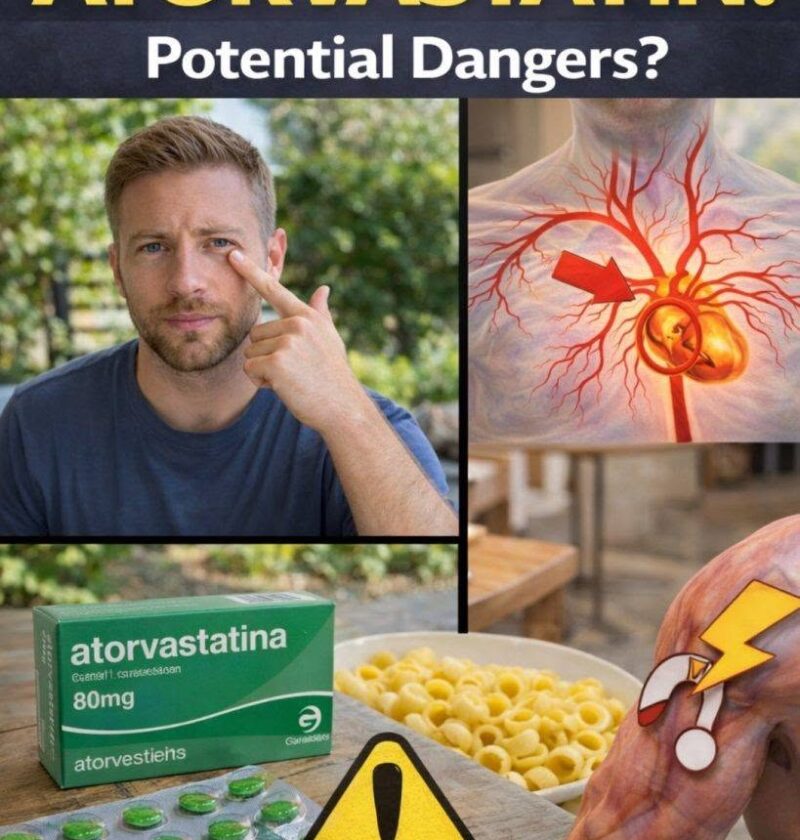
The headline “Atorvastatin Side Effects: 15 Hidden Dangers Your Doctor Might Not Tell You About” uses a fear-based style. Atorvastatin is a widely used statin medication that lowers LDL (“bad”) cholesterol and helps reduce the risk of heart attack and stroke in many people. Like all medicines, it can have side effects, but “hidden dangers” is often an exaggeration.
Possible side effects and risks include:
- Muscle aches or soreness — one of the more commonly reported complaints.
- Muscle weakness or fatigue — can occur in some people.
- Rare serious muscle injury (rhabdomyolysis) — a very uncommon but serious reaction involving muscle breakdown.
- Mild increases in liver enzymes — doctors may monitor liver function if there are concerns.
- Digestive symptoms — such as nausea, diarrhea, or stomach discomfort.
- Headache — reported by some users.
- Sleep changes — some people report insomnia or unusual dreams.
- Blood sugar changes — statins can slightly increase blood glucose levels in some people, especially those already at risk for diabetes.
- Drug interactions — certain medicines and supplements can raise the chance of side effects.
- Memory complaints — rare reports exist, but persistent cognitive harm has not been established as a common effect.
Important:
- Do not stop atorvastatin suddenly without talking to your prescriber. Stopping it may increase cardiovascular risk for people who need it.
- Seek medical advice promptly for severe muscle pain, marked weakness, dark urine, yellowing of the skin/eyes, or severe unusual symptoms.
Many people take atorvastatin safely for years, and for those at elevated cardiovascular risk, the benefits can be substantial.
If you have the “15 dangers” list from the article/video, share it and I can help separate real documented risks from exaggerated claims.