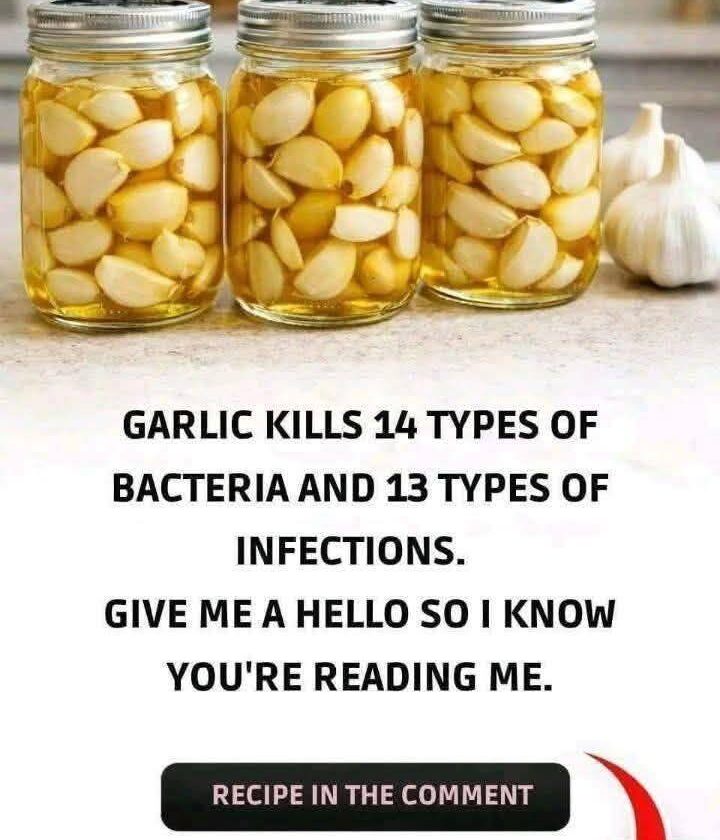
Garlic is often called a “natural antibiotic,” but that phrase is more of a marketing shorthand than a medical fact.
Here’s what’s actually true:
🧄 What garlic can do
Garlic (especially fresh crushed garlic) contains a compound called allicin, which has been shown in lab studies to:
- Kill or slow down some bacteria in test tubes
- Have mild effects against certain fungi and viruses
- Act as an antioxidant and anti-inflammatory agent
- Support general immune function indirectly
So yes—garlic has antimicrobial properties, but mostly in controlled lab settings or high concentrations.
⚠️ What garlic cannot do
Despite the hype, garlic:
- ❌ Does NOT work like real antibiotics (e.g., for pneumonia, UTIs, or serious infections)
- ❌ Cannot replace prescribed medicines
- ❌ Cannot reliably “cure infections” inside the human body on its own
Your stomach acid, digestion, and metabolism break down much of its active compounds before they reach infection sites in strong enough doses.
🧠 Where the “natural antibiotic” idea comes from
The label comes from:
- Early observations of garlic use in traditional medicine
- Lab studies showing antimicrobial effects
- World War-era use of garlic when antibiotics were scarce
But modern medicine requires clinical evidence in humans, not just lab results.
🧄 Real benefits of garlic (supported better by evidence)
Garlic may help with:
- Slight reductions in blood pressure
- Mild cholesterol improvement
- Supporting immune response (modestly)
- Gut microbiome support
⚠️ When to be careful
Garlic in high amounts or supplements can:
- Increase bleeding risk (especially with blood thinners)
- Cause stomach irritation
- Interact with medications
Bottom line
Garlic is a healthy food with mild antimicrobial effects, but it is not a substitute for antibiotics or medical treatment for infections.
If you want, I can break down which real natural foods actually have the strongest evidence for immunity support (beyond garlic).