Fast, Low-Effort Way to Clean Blinds and Remove Dust in Minutes (1500+ Words)
Why Blinds Get So Dusty So Quickly
Window blinds collect dust faster than most household surfaces because they are constantly exposed to:
- Air movement from windows and doors
- Cooking particles (especially in kitchens)
- Fabric fibers from furniture and carpets
- Outdoor pollution and pollen
Unlike flat surfaces, blinds have multiple thin slats, which means dust settles in layers and becomes more visible over time. This is why even recently cleaned rooms can still look “dusty” because the blinds quietly accumulate buildup.
The Problem with Traditional Blind Cleaning
Most people try cleaning blinds using:
- Wet cloth wiping (time-consuming)
- Feather dusters (dust spreads instead of removing)
- Vacuum brushes (not always effective for stuck dust)
These methods often fail because they either:
- Push dust around instead of removing it
- Require too much time per slat
- Leave streaks or residue
That’s why simple household “grandma hacks” are so popular—they focus on speed and efficiency, not perfectionism.
The Simple Science Behind Quick Blind Cleaning
Dust sticks to blinds due to:
- Static electricity
- Grease particles (especially in kitchens)
- Fine airborne dust layering over time
The fastest way to clean them is to:
- Trap dust instead of spreading it
- Wipe multiple slats at once
- Reduce static so dust doesn’t immediately reattach
This is where microfiber cloths and simple household tools become extremely effective.
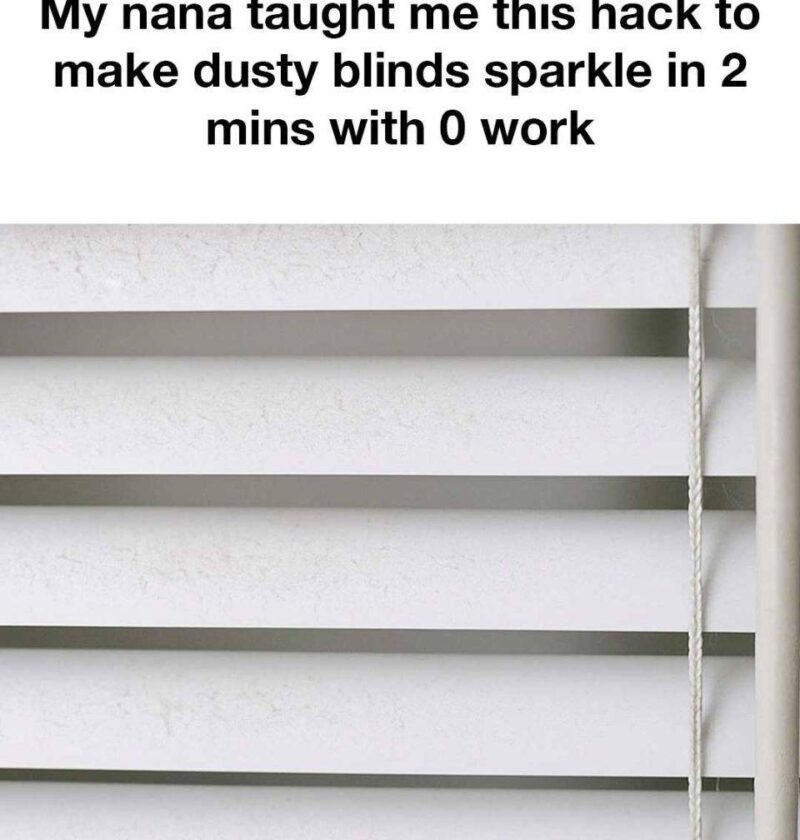
The 2-Minute “Nana Hack” Method Explained
This traditional cleaning trick works because it uses a simple idea: wrap, swipe, and trap dust in one motion.
Instead of cleaning one slat at a time, you clean several together, saving time and effort.
The method usually involves:
- A microfiber cloth
- Tongs OR kitchen tools (in some variations)
- Light moisture or anti-static solution
This combination allows dust to lift off instantly instead of spreading into the air.
Why Microfiber Works So Well
Microfiber
Microfiber is designed with ultra-fine synthetic fibers that:
- Trap dust particles instead of pushing them
- Hold onto dirt through static attraction
- Clean without needing strong chemicals
This makes it ideal for delicate surfaces like blinds, electronics, and glass.
Step-by-Step Logic Behind the Hack
The effectiveness of this method comes from three principles:
1. Surface Contact Efficiency
Instead of wiping one strip at a time, multiple slats are cleaned simultaneously.
2. Dust Capture Instead of Displacement
Microfiber grabs dust instead of scattering it into the air.
3. Minimal Moisture Use
Slight dampness helps bind dust without leaving streaks.
Where This Hack Works Best
This method is especially effective for:
- Plastic blinds (Venetian blinds)
- Lightly dusty aluminum blinds
- Bedroom window blinds
- Office blinds with dry dust buildup
It is less effective if:
- Grease is heavy (kitchen buildup)
- Blinds are extremely dirty and sticky
- Mold or moisture damage is present
Common Mistakes People Make When Cleaning Blinds
Even simple cleaning can go wrong if:
- Cloth is too wet (causes streaking and dirt drips)
- Dusting is done without support underneath (dust falls everywhere)
- Wrong direction is used (slats should be supported gently)
- Harsh chemicals are used unnecessarily
The goal is light, controlled cleaning—not deep scrubbing.
Why This Method Feels Like “Zero Effort”
People describe it as effortless because:
- It reduces repetitive motion
- It cleans multiple slats at once
- It requires no bucket or heavy tools
- It avoids full blind removal
It’s essentially a time-saving maintenance clean, not a deep clean.
Extra Tip for Longer-Lasting Clean Blinds
To keep blinds cleaner for longer:
- Lightly dust once a week
- Keep windows closed during high dust days
- Use a dry microfiber wipe occasionally to reduce static
This reduces buildup and makes future cleaning even faster.
Final Thoughts
The reason this “nana hack” is so popular is simple—it respects real life. Instead of complicated cleaning routines, it focuses on a quick, practical method that fits into busy schedules.
With the right tool (microfiber) and a smart technique, dusty blinds can look refreshed in just a couple of minutes without stress or heavy cleaning effort.
Source
- U.S. Environmental Protection Agency (EPA) – Indoor dust and particulate buildup
- Consumer cleaning science references on microfiber effectiveness
- General household cleaning best practices for window treatments
PART 2: Simple 2-Minute Blind Cleaning Hack
Quick Dusty Blind Sparkle Method
What you need:
- 1 microfiber cloth
- Warm water (optional)
- A flat tool like kitchen tongs (optional for faster cleaning)
Method:
- Wrap a microfiber cloth around both sides of a slat.
- Lightly pinch and slide across each blind strip.
- Repeat across all slats in one quick motion.
- For extra shine, slightly dampen the cloth (not wet).
- Let blinds air dry for a minute.