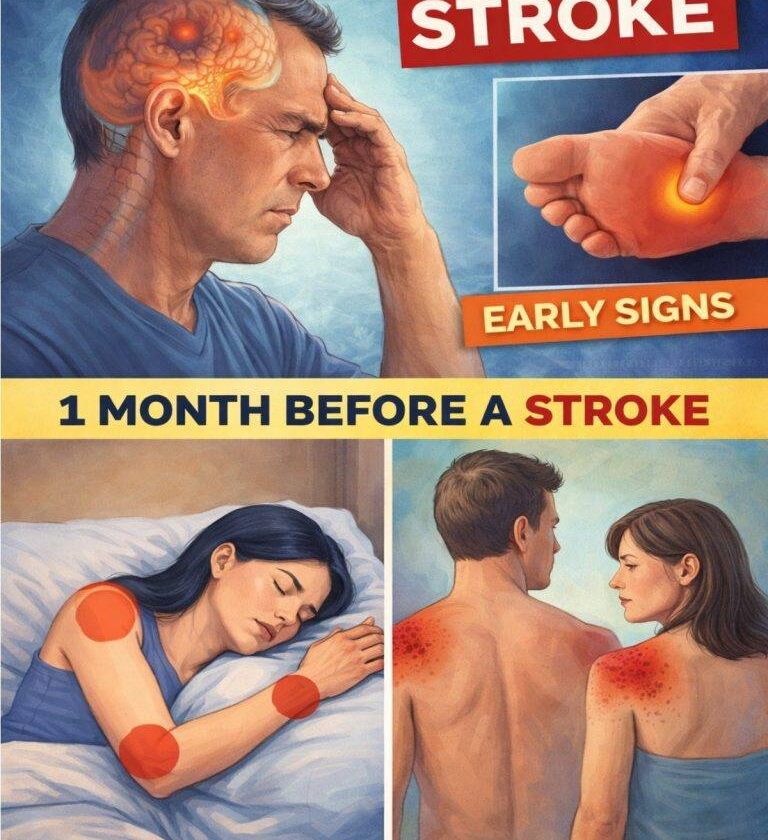
That headline is clickbait-style and medically misleading—there is no reliable medical evidence for a fixed list of “8 subtle warning signs appearing up to one month before stroke,” and claims like “No. 6 saved my patient’s life” are marketing language, not clinical science.
What is true is that some people experience early warning symptoms or “mini-strokes” before a full stroke, especially in the case of a transient ischemic attack (TIA).
A more accurate, medically grounded overview looks like this:
🧠 What actually happens before a stroke?
A stroke (Stroke) usually happens suddenly, but in some cases the brain gives short warning episodes—most importantly Transient Ischemic Attacks (TIAs), sometimes called “mini-strokes.” These can occur days or weeks before a major stroke.
⚠️ Real warning signs you should never ignore
These symptoms may appear briefly and then disappear:
- Sudden weakness or numbness (face, arm, or leg—especially one side)
- Slurred speech or difficulty understanding speech
- Sudden vision problems (blurred or lost vision in one eye)
- Sudden dizziness, loss of balance, or coordination issues
- Unusual, severe headache with no clear cause
- Temporary confusion or memory difficulty
- Facial drooping on one side
- Brief episodes of limb “heaviness” or clumsiness
👉 Even if symptoms disappear in minutes, it can still be a medical emergency.
🛡️ Evidence-based ways to reduce stroke risk
Instead of “miracle tricks,” prevention is based on controlling risk factors:
- Keep blood pressure under control (most important factor)
- Manage diabetes properly
- Stop smoking and avoid secondhand smoke
- Exercise regularly (at least 150 minutes/week moderate activity)
- Maintain a healthy weight
- Reduce salt and processed food intake
- Control cholesterol levels
- Limit alcohol intake
- Treat heart conditions like atrial fibrillation properly
🚨 When to seek emergency help
Use the FAST rule:
- Face drooping
- Arm weakness
- Speech difficulty
- Time to call emergency services immediately
Bottom line
There are no guaranteed “one-month early warning lists”, but there are real short-lived neurological symptoms (especially TIAs) that can warn of a future stroke. Treating them seriously can genuinely prevent disability or death.
If you want, I can turn this into a simple infographic, checklist for family use, or explain how to distinguish stroke vs migraine vs anxiety symptoms.