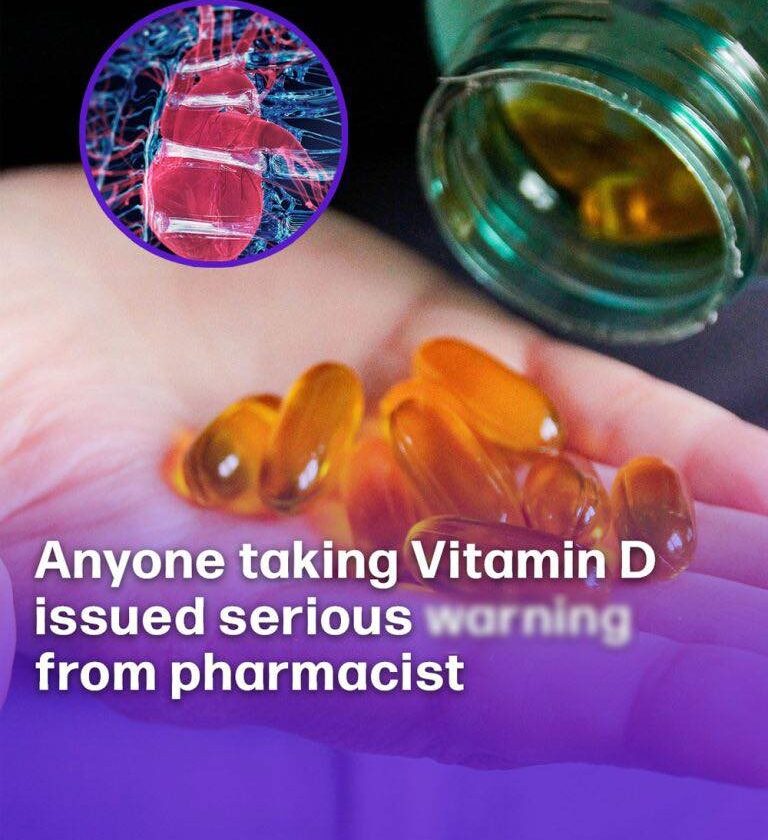
That headline is also typical “warning-style” clickbait. Vitamin D is generally safe and beneficial when taken at appropriate doses, but it can be harmful if misused—this is usually what those posts are loosely referring to.
🧠 What vitamin D actually does
Vitamin D helps:
- Absorb calcium for strong bones
- Support muscle function
- Support immune health
Most people get it from:
- Sunlight
- Food (eggs, fish, fortified milk)
- Supplements if levels are low
⚠️ When vitamin D becomes a problem
The real issue is overdose from high-dose supplements over time, not normal use.
Too much vitamin D can cause hypercalcemia (high calcium levels), which may lead to:
- Nausea, vomiting
- Constipation
- Weakness and fatigue
- Frequent urination
- Kidney strain or kidney stones (in severe cases)
🚨 Who should be more careful
People at higher risk of problems:
- Taking high-dose supplements without testing
- Long-term use of very high doses (e.g., mega doses weekly/daily)
- Kidney disease patients
- Taking multiple calcium + vitamin D products together
🧪 What doctors actually recommend
- Check vitamin D levels if possible (blood test)
- Use moderate doses only if needed
- Follow prescribed dosage—not social media advice
🧠 Bottom line
Vitamin D is not dangerous when used correctly, but over-supplementation without medical guidance can cause harm over time. The scary headline is usually exaggerating that point.
If you want, I can tell you:
- the safe daily dose range for adults and seniors
- signs of vitamin D deficiency vs excess
- natural ways to increase it without supplements