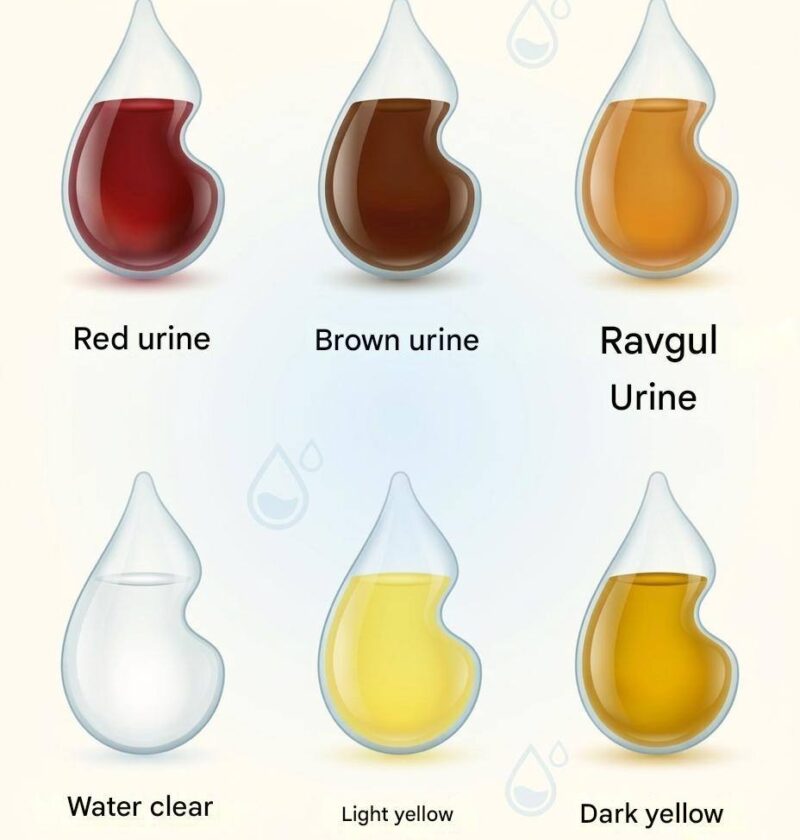
Urine color can give basic clues about hydration and sometimes health, but it’s not a diagnostic test on its own.
Your urine is mostly water plus waste filtered by your kidneys, and its color mainly depends on concentration and certain substances.
What different urine colors usually mean
💛 Light yellow / pale straw (ideal)
This is normal and usually means:
- Good hydration
- Healthy kidney function in most cases
🌑 Dark yellow / amber
Often means:
- Mild dehydration
- You need more fluids
Common after sweating, exercise, or not drinking enough water.
🟠 Orange
Can be caused by:
- Dehydration
- Certain medications or vitamins (especially B-complex)
- Sometimes liver or bile issues (if persistent)
🔴 Pink / red
Possible causes:
- Blood in urine (infection, stones, or other issues)
- Beets or certain foods (temporary harmless effect)
- Some medications
👉 This should be checked if not clearly food-related.
🟢 Blue / green (rare)
Can occur due to:
- Rare medications or dyes
- Certain infections (uncommon)
Usually not dangerous but worth checking if unexplained.
🟤 Brown / cola-colored
May indicate:
- Severe dehydration
- Liver issues
- Muscle breakdown (rare but serious in some cases)
👉 This should be evaluated promptly if not explained by diet/meds.
Important reality check
Urine color is influenced by:
- hydration level (biggest factor)
- vitamins (especially B vitamins)
- food (beets, food dyes)
- medications
It does not reliably diagnose disease on its own.
When to see a doctor
Seek medical advice if:
- blood-colored urine persists
- pain or burning occurs
- very dark urine continues despite drinking water
- changes last more than a couple of days without explanation