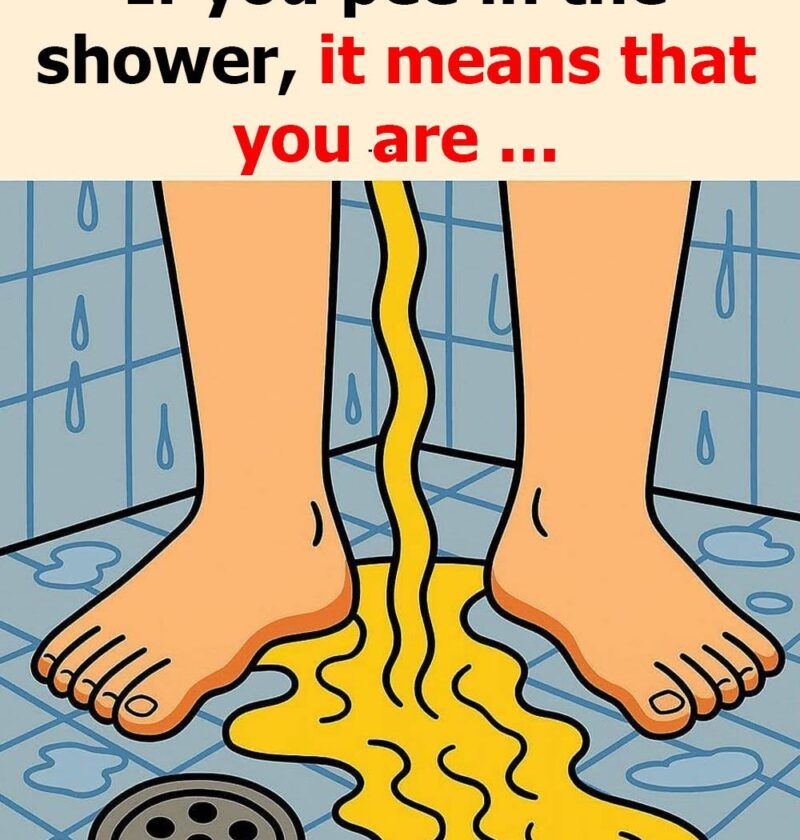
Peeing in the shower is more common than people admit, and in most cases it’s not medically dangerous, but it does come with some practical and hygiene considerations.
🚿 Is peeing in the shower safe?
For a healthy person, it is generally harmless occasionally, because:
- Urine is mostly water and sterile when it leaves the body (in healthy individuals)
- Shower water washes it away immediately
But “harmless” doesn’t mean it’s always a good habit.
⚠️ Possible downsides
1. Pavement of habit (brain association)
- Your brain can start linking shower → urination
- This may make you feel the urge to pee whenever you shower
2. Hygiene concerns (in shared bathrooms)
- In public or shared showers, it is not appropriate or hygienic
3. Muscle conditioning issue (rare concern)
- Regularly peeing in relaxed positions might slightly affect bladder control habits in sensitive individuals
- Not a major medical risk, but not recommended as a routine habit
4. Infections (rare but possible)
- If you have open cuts or infections, avoiding urine contact is better
🧠 Common myths
- ❌ “It cleans the shower” → not really
- ❌ “It’s unhealthy for kidneys” → false
- ❌ “It causes disease” → not true for healthy people
👍 When it’s more acceptable
- Private bathroom
- Occasional convenience
- Immediately rinsed with running water
🚫 When to avoid it
- Public showers (gyms, pools)
- Shared household bathrooms
- If it becomes a compulsive habit
🧠 Bottom line