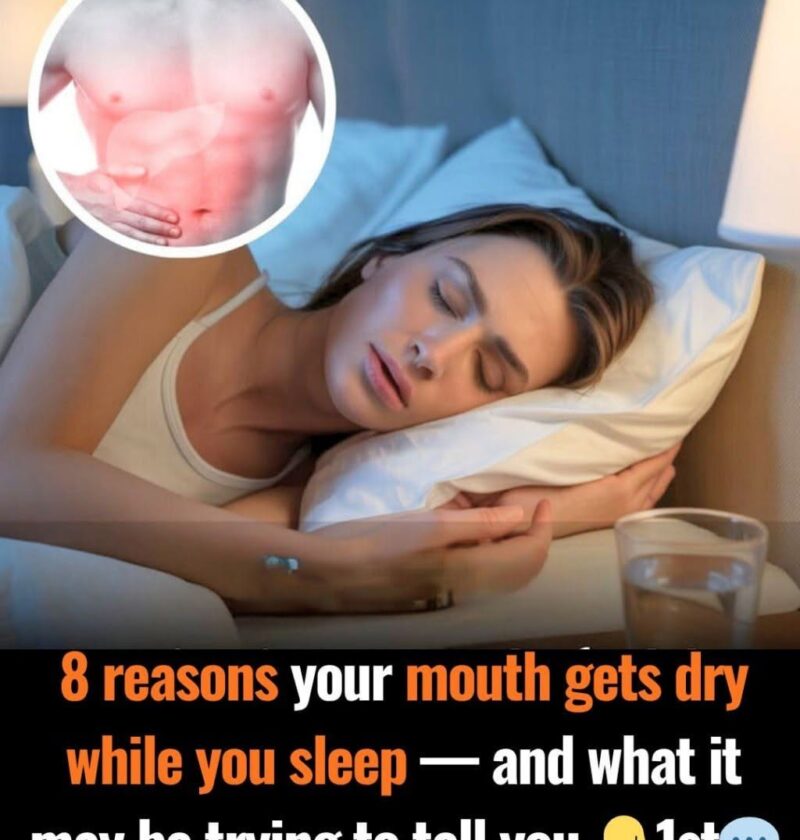
That kind of headline is again written to sound alarming. Waking up with a dry mouth is usually common and often harmless, but yes—it can sometimes point to something worth adjusting.
Here are the real, medically grounded reasons it happens:
😮💨 1. Mouth breathing during sleep
The most common cause. If you breathe through your mouth instead of your nose, saliva dries out overnight.
Often linked to:
- Nasal congestion
- Allergies
- Deviated septum
😴 2. Snoring or sleep apnea
People with Obstructive Sleep Apnea often breathe through the mouth due to airway obstruction. This can cause:
- Dry mouth
- Loud snoring
- Daytime fatigue
💧 3. Mild dehydration
Not drinking enough fluids during the day—or sweating in hot weather—can show up at night.
💊 4. Medications
Many common medicines reduce saliva, including:
- Antihistamines
- Antidepressants
- Blood pressure drugs
😰 5. Stress or anxiety
Stress can change breathing patterns and increase nighttime mouth breathing.
🦷 6. Poor oral habits or hygiene
Dental issues or gum disease can worsen dry mouth sensations.
🏠 7. Dry environment
Air conditioning, heaters, or low humidity can dry out your airway.
🍷 8. Alcohol or caffeine before bed
Both can dehydrate and also relax throat muscles, increasing mouth breathing.
⚠️ When it matters more
You should consider checking with a doctor if dry mouth is:
- Frequent and severe
- Combined with loud snoring or choking at night
- Causing constant fatigue
👍 Simple fixes that often help
- Drink water earlier in the evening (not just at bedtime)
- Use a humidifier
- Treat nasal congestion
- Avoid alcohol late at night
- Consider nasal strips if you snore
If you want, I can narrow this down to “most likely causes based