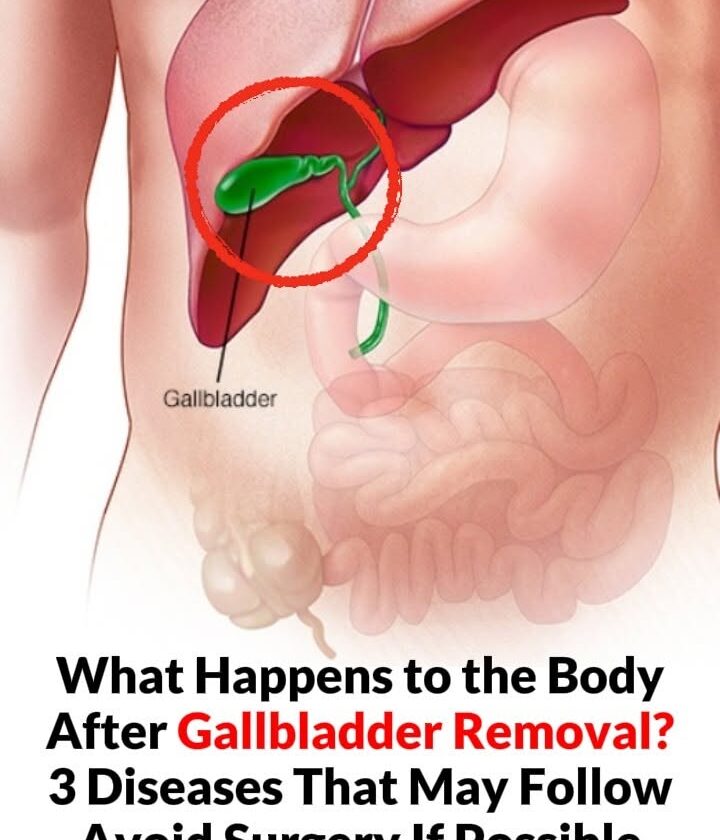
That headline is misleading and fear-based.
Gallbladder removal (also called cholecystectomy) is a very common and generally safe surgery, usually done for gallstones or inflammation. Most people live normal, healthy lives afterward.
There is no rule that “3 diseases will follow” or that surgery should be avoided if possible in all cases. In fact, for many patients, surgery prevents serious complications.
🧠 What actually changes after gallbladder removal
The gallbladder stores bile. After removal:
- Bile flows directly from the liver into the intestine
- Digestion still works normally, but less concentrated bile is released
⚖️ Possible short-term effects (common, usually temporary)
💩 1. Digestive changes
- Loose stools or mild diarrhea (especially after fatty meals)
- Bloating or gas in some people
🍽️ 2. Food sensitivity
- Fatty or fried foods may feel harder to digest at first
⏳ 3. Adjustment period
- Body usually adapts within weeks to months
⚠️ Possible long-term issues (not guaranteed)
A small number of people may experience:
🔄 1. Bile reflux gastritis
- Irritation of the stomach from bile flow
💩 2. Chronic diarrhea (rare)
- Often manageable with diet changes
🧪 3. Post-cholecystectomy syndrome
- A mix of symptoms like bloating or abdominal discomfort
These are not “new diseases everyone gets,” just possible complications in some cases.
❌ What the claim gets wrong
- There are no specific “3 diseases that always follow”
- Surgery is not something to “avoid if possible” universally
- Untreated gallbladder disease can be far more dangerous
🚨 Why surgery is often recommended
If gallstones or inflammation are present, leaving the gallbladder untreated can lead to: