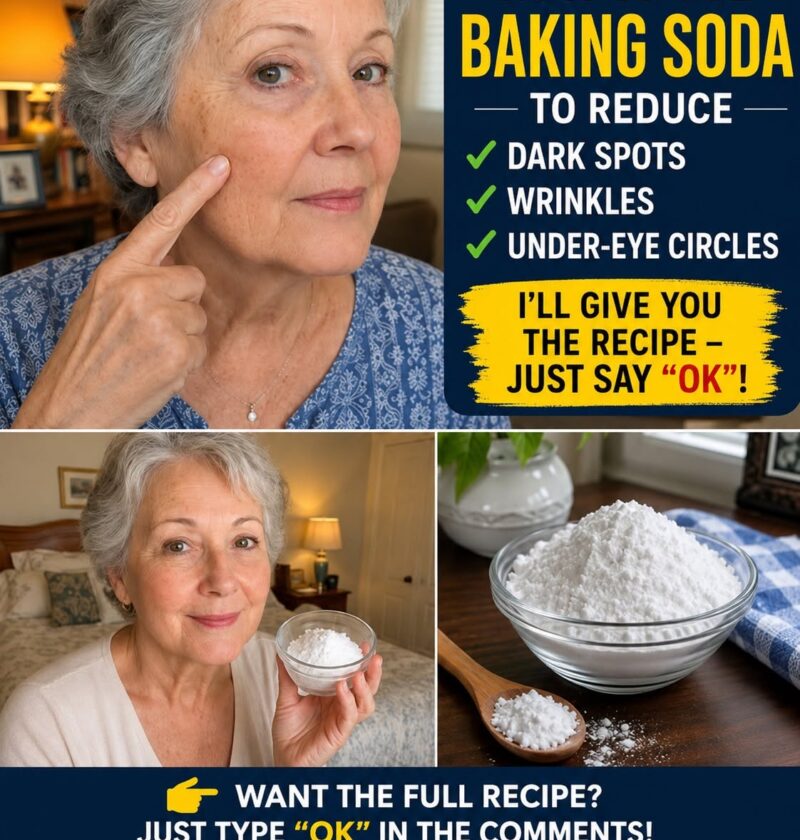
The claim “Use baking soda to fade even the darkest spots” is not supported by strong scientific evidence, and using baking soda directly on the skin can sometimes do more harm than good.
Why People Try Baking Soda
Baking Soda is mildly abrasive and has an alkaline pH. Some home remedies claim it can:
- Exfoliate dead skin cells
- Brighten the skin
- Fade dark spots
However, these claims are largely anecdotal.
Potential Risks
Baking soda has a much higher pH than healthy skin. Regular application may:
- Disrupt the skin barrier
- Cause irritation, redness, or burning
- Increase dryness
- Worsen post-inflammatory hyperpigmentation (dark spots left after acne or irritation)
Ironically, irritation itself can sometimes lead to more pigmentation, especially in people with darker skin tones.
What Works Better for Dark Spots?
Dark spots (hyperpigmentation) often respond better to ingredients with clinical evidence behind them, such as:
- Niacinamide
- Azelaic Acid
- Vitamin C
- Retinoids
- Alpha Hydroxy Acids (AHAs)
And most importantly:
Daily Sunscreen
Broad-Spectrum Sunscreen
Without sun protection, dark spots often persist or return regardless of treatment.
If You Still Want to Try Baking Soda
If you choose to experiment with it:
- Patch-test on a small area first
- Stop immediately if irritation occurs
- Avoid using it on broken, sensitive, or inflamed skin
- Do not expect dramatic fading of dark spots
Key Takeaway
There is no good evidence that baking soda can safely fade “even the darkest spots.” Because it can irritate the skin and potentially worsen pigmentation, dermatologists generally recommend proven ingredients such as niacinamide, azelaic acid, retinoids, and daily sunscreen instead.
If you tell me:
- whether the spots are from acne, sun exposure, melasma, or another cause,
- and your skin type,