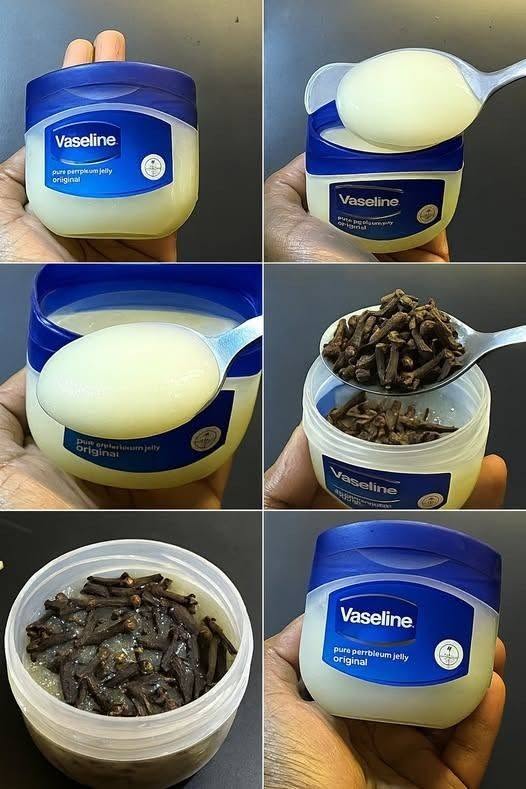
That’s another viral “secret hack” style claim, and it’s not something you should trust or use blindly.
Mixing cloves with petroleum jelly is often promoted online for things like pain relief, skin infections, or acne—but the evidence for those claims is very weak and the risks are real.
🌿 What cloves actually do
Clove contains compounds like eugenol, which has:
- Mild numbing (analgesic) effect
- Antimicrobial properties in lab studies
- Strong irritation potential in high concentration
This is why cloves are sometimes used in diluted form in dental products.
🧴 What petroleum jelly does
Vaseline is mainly:
- An occlusive moisturizer (locks in moisture)
- Protective barrier for dry or irritated skin
- Not a treatment for infection or inflammation
⚠️ Why mixing them is NOT a “secret cure”
There is:
- ❌ No clinical evidence that the mix treats skin diseases, pain, or infections
- ❌ No proven benefit for acne, arthritis, or “healing wounds faster”
- ⚠️ Risk of skin irritation or allergic reaction (especially from clove oil compounds)
- ⚠️ Risk of burning sensation if used on sensitive skin
Clove oil in particular can irritate or even chemically burn skin if not properly diluted.
🧠 Where this idea comes from
These types of claims usually come from:
- Traditional remedies with no dosage control
- Social media “life hacks”
- Misuse of essential oil properties
A substance having antibacterial properties in a lab does not mean it is safe or effective as a DIY skin treatment.
🚫 Safer reality-based alternatives
Depending on the goal:
- For dry skin → petroleum jelly alone or ceramide creams
- For acne → salicylic acid or benzoyl peroxide
- For pain → approved topical analgesics
- For infections → proper medical treatment