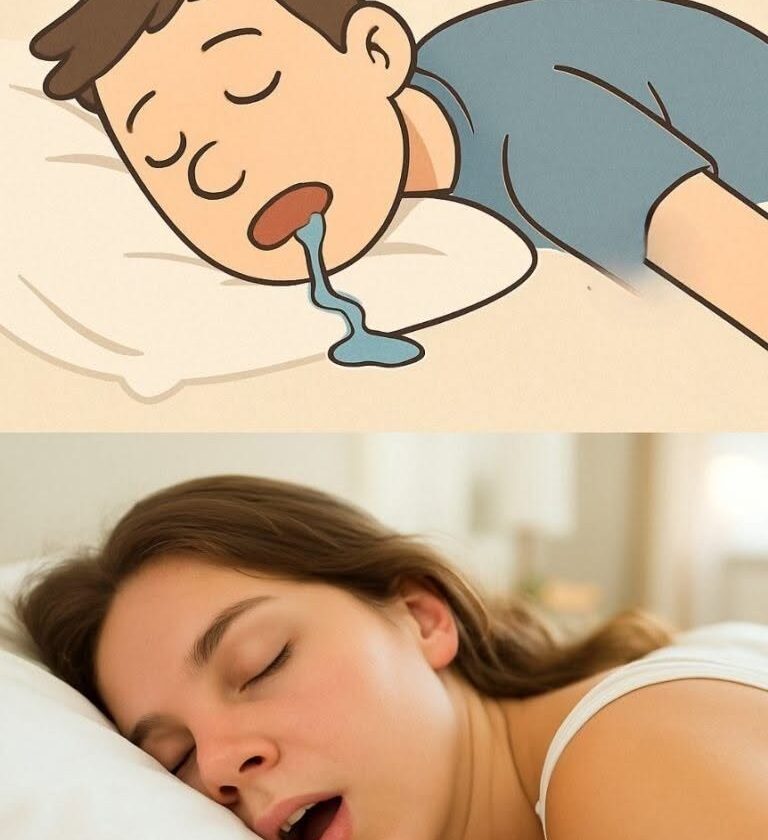
That’s another viral “See More” type claim that usually ends with something dramatic like “brain damage,” “parasites,” or “neurological disease.” In reality, it’s almost never that serious.
What drooling during sleep usually means
Drooling (called sleep drooling or sialorrhea) is common and usually harmless. It happens when saliva escapes the mouth because:
- You sleep with your mouth open
- You’re in a deep sleep stage where swallowing slows down
- You sleep on your side or stomach
- You have nasal congestion (cold, allergies, sinus issues)
- You produce slightly more saliva (can happen with some foods or medications)
When it might need attention (less common)
In rare cases, excessive drooling during sleep can be linked to conditions affecting swallowing or muscle control, such as:
- Neurological disorders (for example, Parkinson’s disease)
- Certain nerve or muscle conditions
- Severe acid reflux
But these are usually accompanied by other clear symptoms, not just drooling alone.
Key takeaway
Drooling while sleeping is very common and usually normal, especially if it happens occasionally. It is not, by itself, a sign that your brain is damaged or failing.
If you want, tell me how often it happens and whether you have other