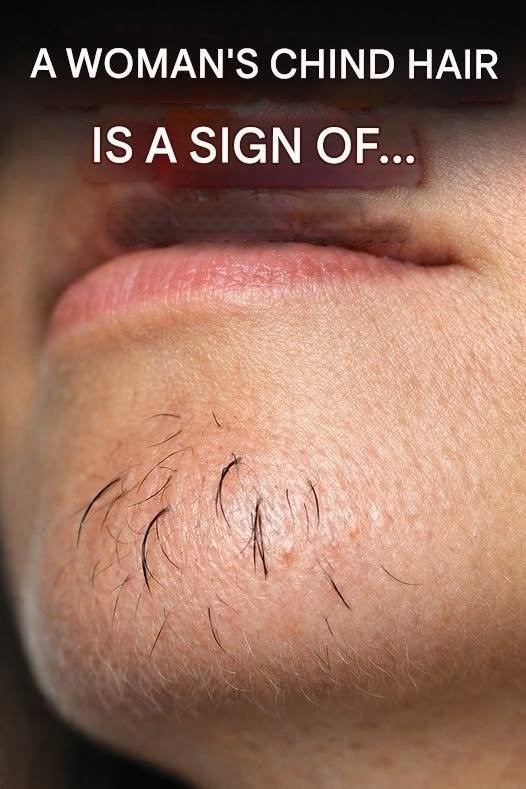
That phrase — “A woman’s chin hair is a sign of… See more” — is another clickbait teaser, and by itself it is misleading because it suggests one simple hidden meaning for something that actually has multiple normal and medical explanations.
Is chin hair in women a sign of something?
Hirsutism (which includes chin or facial hair growth) can happen for several reasons, and most are not dangerous.
1. Normal hormonal variation
Small amounts of chin or facial hair can be completely normal, especially:
- After age 30–40
- During menopause
- Due to natural sensitivity to androgens
Hormone levels change throughout life.
2. Genetics (very common)
Family traits play a big role:
- Some women naturally grow more facial hair
- It can run in families
- Not linked to disease in many cases
3. Polycystic Ovary Syndrome (PCOS)
One medical cause is:
Polycystic Ovary Syndrome
It may also include:
- Irregular periods
- Acne
- Weight changes
- Increased body hair
But chin hair alone does NOT mean someone has PCOS.
4. Aging and menopause
After menopause:
- Estrogen levels drop
- Androgens may become relatively stronger
- This can cause new facial hair growth
This is common and usually not harmful.
5. Medications or health conditions (less common)
In some cases:
- Certain medications
- Rare hormonal disorders
- Adrenal gland issues
These require medical evaluation, but they are not the most common cause.
What it is NOT a sign of
❌ It does NOT automatically mean infertility
❌ It does NOT always mean hormonal disease
❌ It does NOT predict serious illness by itself
When to see a doctor
Consider medical advice if chin hair appears with:
- Sudden rapid growth
- Irregular or missing periods
- Deep voice changes
- Severe acne
- Other signs of hormone imbalance
The bottom line
Chin hair in women is usually due to normal hormonal changes, genetics, or aging, and only sometimes linked to a medical condition. The viral claim oversimplifies a very common and often harmless variation in the body.