That’s another classic viral health claim, and it’s partly misleading.
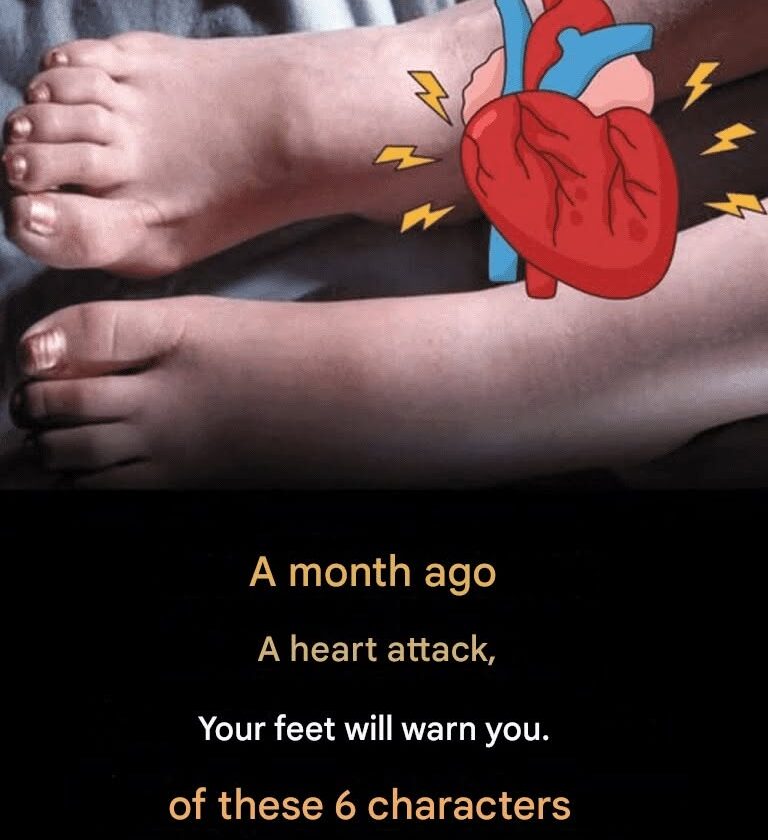
A month before a heart attack, there is no reliable set of “foot-only warning signs” that can predict it. However, some circulation-related symptoms in the feet and legs can be associated with underlying heart disease, especially Coronary artery disease or Peripheral artery disease.
Here’s what’s actually true vs exaggerated:
Real symptoms that may involve the feet/legs
These can suggest poor circulation, but they do NOT specifically mean a heart attack is coming:
- Cold feet or legs (reduced blood flow)
- Swelling in feet/ankles (can relate to heart failure or other conditions)
- Pain or cramping when walking (called claudication in peripheral artery disease)
- Slow-healing wounds on feet
- Numbness or tingling (can be nerve or circulation-related)
- Bluish or pale skin color in toes
Important reality check
- These symptoms usually reflect chronic circulation problems, not an immediate “1-month warning.”
- Many people with these symptoms never have a heart attack, and many heart attacks happen without clear foot symptoms.
More reliable heart warning signs
If someone is approaching a heart attack, these are much more important:
- Chest pressure or tightness
- Pain spreading to arm, jaw, or back
- Shortness of breath
- Unusual fatigue
- Nausea or sweating
- Dizziness
These are linked to acute coronary events, not foot changes alone.
Bottom line
Foot symptoms can sometimes signal poor circulation or vascular disease, but they are not a predictive “6-sign warning system” for a heart attack one month in advance.
If you want, I can break down early warning signs of heart disease that are actually medically reliable, or help you understand which symptoms need urgent attention.