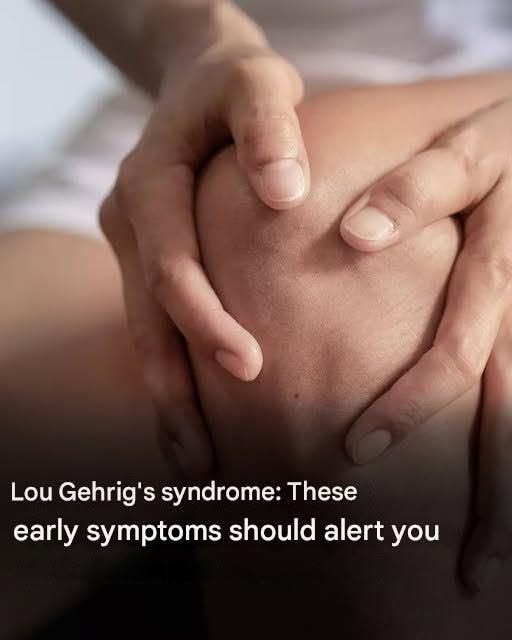
Lou Gehrig’s syndrome is another name for Amyotrophic lateral sclerosis (ALS), a progressive neurological disease that affects nerve cells controlling voluntary muscles.
The early symptoms can be subtle and vary from person to person, which is why ALS is often not recognized immediately.
⚠️ Early symptoms of ALS
1. Muscle weakness (most common first sign)
- Weak grip (dropping objects)
- Trouble lifting things
- Difficulty climbing stairs or walking
2. Muscle twitching (fasciculations)
- Small, involuntary muscle twitches
- Often in arms, legs, or tongue
3. Stiffness or cramping
- Muscles may feel tight or painful
- Especially in hands and legs
4. Slurred or changed speech
- Speech becomes unclear or nasal
- Trouble forming words
5. Difficulty with fine motor tasks
- Buttoning clothes
- Writing clearly
- Using utensils
6. Trouble swallowing (in some cases early, more often later)
- Choking on liquids or food
- Feeling like food “sticks”
🧠 Important facts
- ALS usually does not affect memory or thinking early on
- Symptoms often start in one limb and gradually spread
- It progresses over time, affecting more muscle groups
⚠️ Conditions that can mimic early ALS
Many less serious conditions can look similar, such as:
- Vitamin deficiencies
- Nerve compression (like pinched nerves)
- Thyroid problems
- Benign muscle twitching
That’s why diagnosis always requires a specialist evaluation.
🟢 When to see a doctor
Seek medical advice if you notice:
- Progressive weakness that doesn’t improve
- Increasing difficulty with daily tasks
- Persistent speech or swallowing problems
🧾 Bottom line
ALS is rare, and early symptoms are often subtle muscle-related changes—not general fatigue or occasional twitching alone. A proper neurological exam is needed to confirm any concern.
If you want, I can explain how ALS is diagnosed step-by-step and what tests doctors actually use, in simple terms.