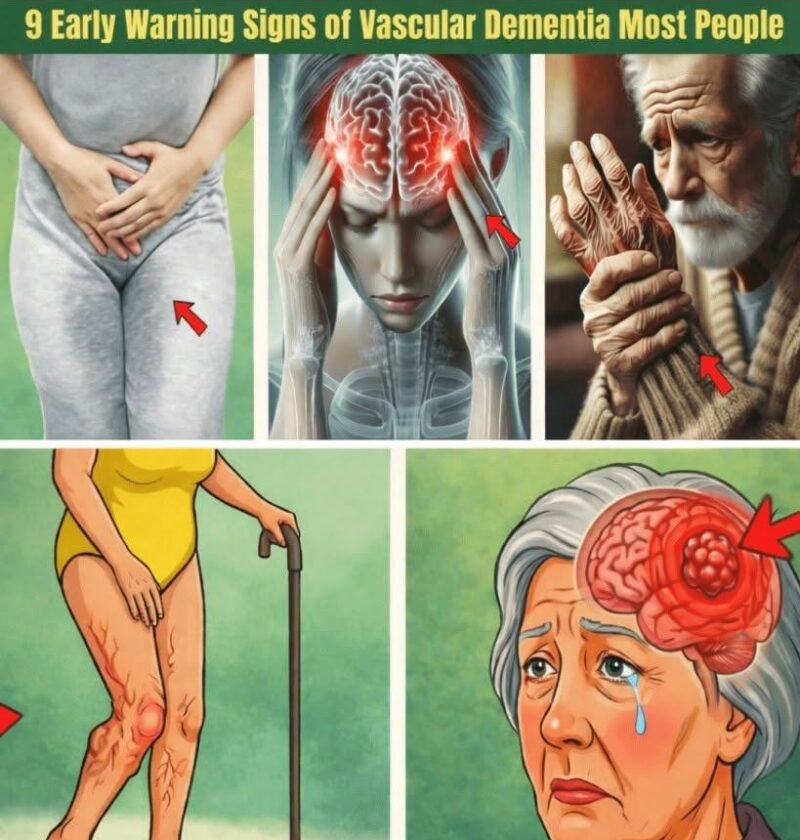
That headline is clickbait. It takes a real medical condition and adds fear-based phrasing like “before it’s too late” and “most people miss #3,” which isn’t how diagnosis actually works.
The condition being referred to is Vascular dementia, which happens when reduced blood flow damages brain tissue, often after strokes or small vessel disease.
🧠 Real early signs doctors actually look for
Early symptoms can be subtle and vary, but commonly include:
1. Slowed thinking
People may take longer to process information or make decisions.
2. Difficulty with planning or organization
Trouble managing tasks like finances, cooking, or following steps.
3. Problems with attention
Easily distracted or unable to focus on conversations or tasks.
4. Mood or personality changes
Irritability, apathy, or depression may appear early.
5. Mild memory issues
Often less prominent than in Alzheimer’s, but still present.
6. Subtle movement or balance changes
Shuffling walk, unsteadiness, or slower movement can occur.
⚠️ Important reality check
- These symptoms are not specific to dementia
- They can also come from stress, depression, sleep issues, vitamin deficiencies, thyroid problems, or medication side effects
- Diagnosis requires medical testing, brain imaging, and cognitive evaluation
🚨 When it’s more concerning
Doctors get more alert when:
- Symptoms worsen steadily over time
- There’s a history of stroke or mini-strokes
- Daily functioning becomes affected (money, cooking, navigation)