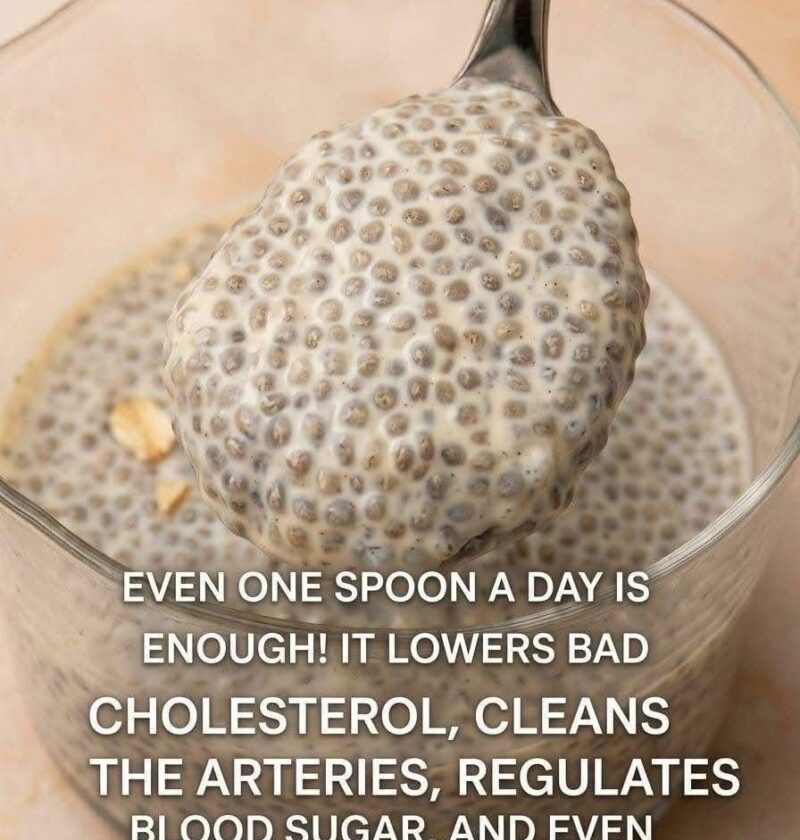
That claim is a classic “miracle food” marketing line, and it’s not scientifically reliable as stated.
No single food or “one spoon a day” ingredient can:
- “clean arteries”
- reliably “lower bad cholesterol” on its own
- “regulate blood sugar” in a medically meaningful way
- or “suppress hunger” in a strong, consistent therapeutic way
Those are processes that depend on overall diet, activity, genetics, and medical treatment, not one quick fix.
In real medicine and nutrition:
What is true (in a limited sense)
Some foods can support heart and metabolic health as part of a diet:
- Soluble fiber (oats, psyllium, legumes) can help reduce LDL cholesterol modestly
- Healthy fats (olive oil, nuts) can improve lipid profiles
- Protein + fiber can help with satiety
- Whole dietary patterns (like Mediterranean-style diets) improve long-term outcomes
What is false or exaggerated
- “Cleans arteries” → arteries don’t get physically “cleaned” by foods; plaque reduction is a medical process, sometimes involving drugs or procedures
- “One spoon is enough” → real effects require consistent intake and overall lifestyle changes
- “Even regulates blood sugar” → only meaningful in the context of diabetes management plans
Why these claims spread
They’re usually attached to things like:
- honey, cinnamon, olive oil, garlic, or herbal mixtures
- or “ancient remedy” style posts designed for clicks or sales
If you tell me what specific ingredient they were talking about, I can break down what science actually says about that exact one.