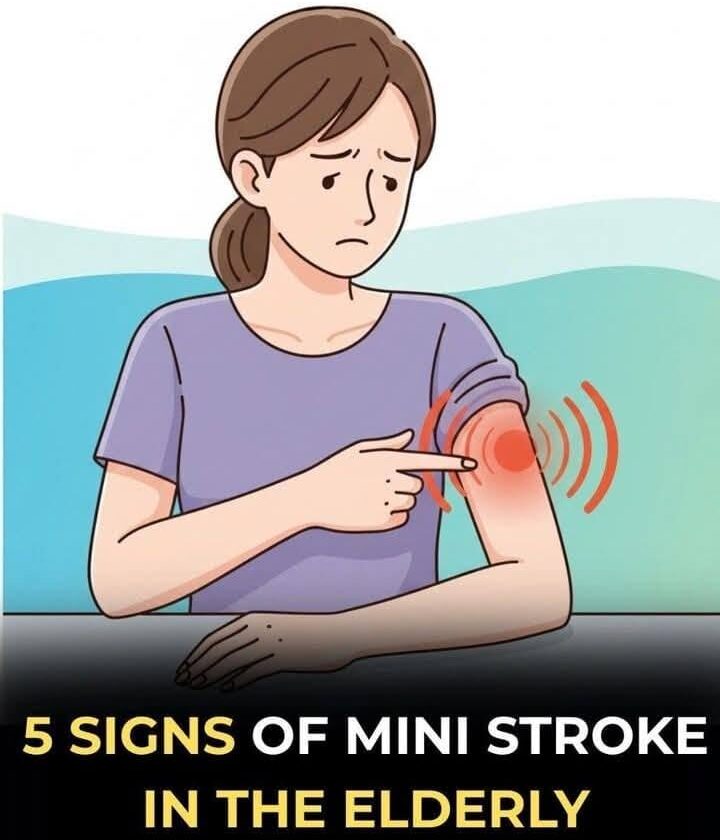
A “mini stroke” is commonly called a Transient ischemic attack (TIA). It happens when blood flow to part of the brain is briefly blocked. Symptoms usually resolve within minutes to hours, but it’s a serious warning sign of a possible future Stroke.
Here are 5 key signs of a mini stroke in elderly people:
1) Sudden face drooping
- One side of the face may look uneven
- Smile becomes lopsided
- Drooling from one corner of the mouth
This is often one of the most noticeable early signs.
2) Arm or leg weakness (usually one side)
- Sudden weakness or numbness
- Difficulty lifting one arm
- Clumsiness while walking or holding objects
Even brief weakness should be taken seriously.
3) Speech or language difficulty
- Slurred speech
- Trouble finding words
- Confusion while talking or understanding others
This may come and go quickly in a TIA.
4) Sudden vision problems
- Blurred vision
- Double vision
- Loss of vision in one eye
Some people describe it as a “curtain coming down” over vision.
5) Dizziness, loss of balance, or confusion
- Sudden unsteadiness while walking
- Feeling like the room is spinning
- Difficulty coordinating movements
- Sudden unexplained confusion
These can occur without other obvious symptoms.
⚠️ Important warning
Even if symptoms disappear within minutes, a TIA is an emergency warning sign. Many strokes happen within days after a mini stroke.
Doctors use the FAST rule:
- Face drooping
- Arm weakness
- Speech difficulty
- Time to call emergency help
Bottom line
A mini stroke is often brief, but it should never be ignored—especially in older adults. It’s the body’s way of signaling a high stroke risk ahead.
If you want, I can also explain:
- how doctors confirm a TIA
- or how to reduce stroke risk after one happens