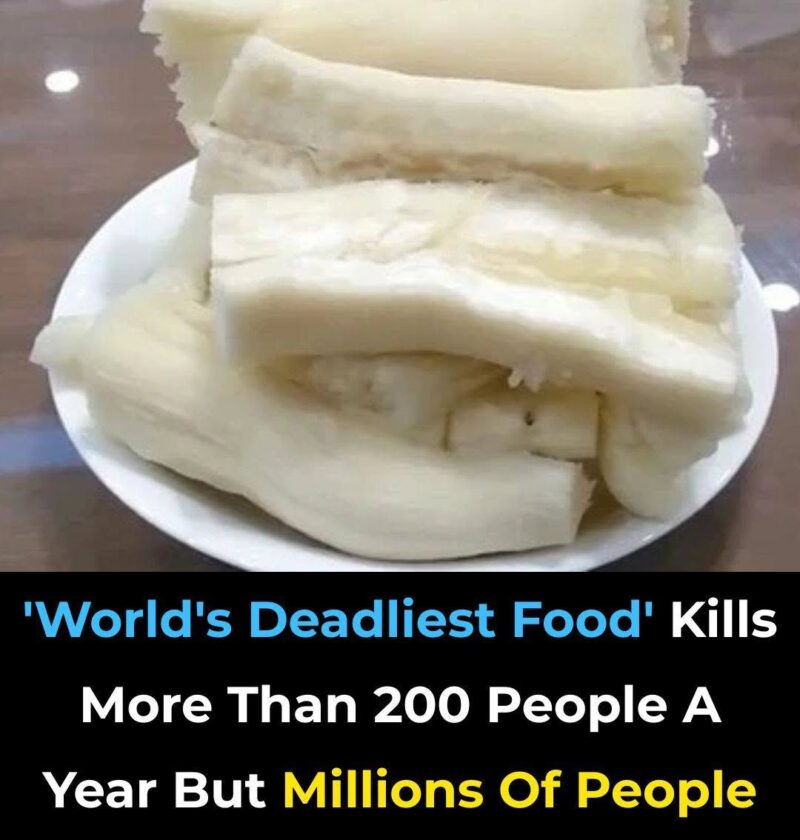
That headline is almost certainly referring to cassava (also called manioc or yuca)—a staple food for hundreds of millions of people worldwide.
The “world’s deadliest food” label is misleading clickbait, but it has a small kernel of truth.
What food is it talking about?
It’s Cassava, a root vegetable grown widely in Africa, South America, and parts of Asia.
It feeds over 500 million people, especially in regions where it is a key source of calories.
Why do people call it “deadly”?
Cassava contains natural chemicals called cyanogenic glycosides, which can release cyanide if:
- It is eaten raw or under-processed
- It is poorly prepared or improperly fermented
- It comes from “bitter” cassava varieties with higher toxin levels
Cyanide interferes with oxygen use in the body, and in extreme cases can be fatal.
Does it really kill “200+ people a year”?
Yes—but with important context:
- Deaths usually happen in famine, poverty, or food shortage situations
- Most cases are linked to improper processing during crises, not normal consumption
- The vast majority of cassava eaten worldwide is safely processed and non-toxic
So the risk is real—but very context-dependent.
Why 500 million people still eat it safely
When prepared correctly, cassava is safe:
Proper methods include:
- Peeling
- Soaking or fermenting
- Drying or boiling thoroughly
These steps remove most of the cyanide compounds.
Bottom line
Cassava is not a “dangerous food” in normal life.
It is:
- A major global staple
- Safe when properly prepared
- Only dangerous when traditional preparation steps are skipped or unavailable
If you want, I can list other foods that are often labeled “dangerous” but are actually safe when prepared correctly—it’s a surprisingly interesting list.