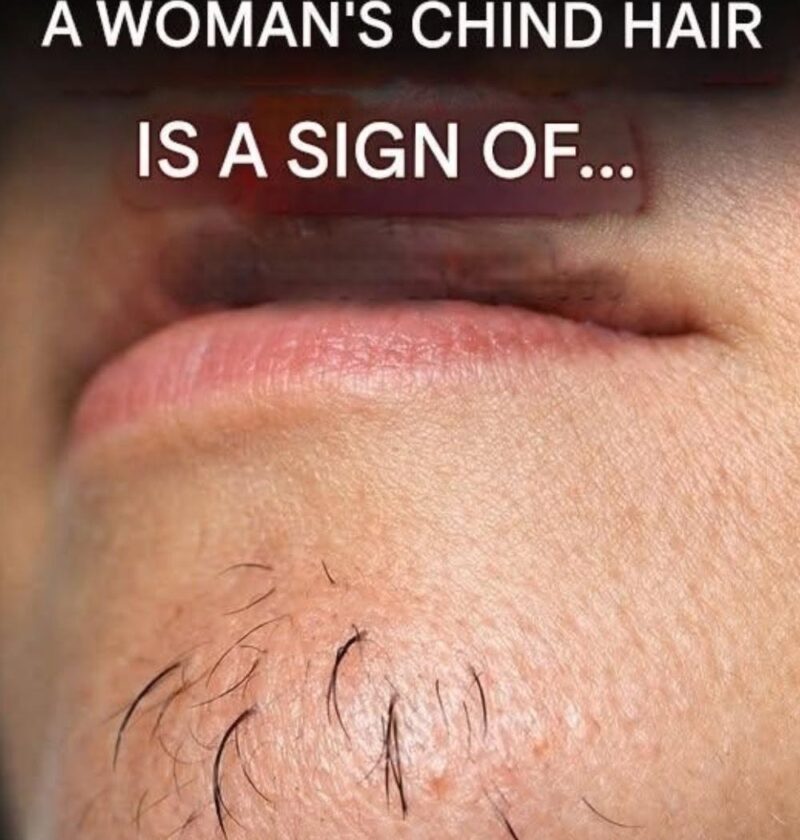
Chin hair growth in women is usually related to a condition called Hirsutism, where coarse or dark hair appears in areas typically more sensitive to male hormones (androgens), such as the chin, upper lip, and jawline.
Both stress and diet don’t directly “create” chin hair on their own, but they can significantly influence the hormonal balance that drives it.
1. How Stress Affects Chin Hair Growth
Chronic stress impacts the body through the hormone cortisol.
- Raises androgen activity indirectly: Long-term stress can disrupt the balance between cortisol, estrogen, and androgens. In some women, this may tilt toward relatively higher androgen effects, which can increase facial hair growth.
- Worsens PCOS symptoms: Stress can aggravate insulin resistance and hormonal imbalance in conditions like PCOS, which is a common cause of chin hair.
- Triggers inflammatory responses: Inflammation may worsen skin and follicle sensitivity, making hair growth patterns more noticeable.
Important point: stress doesn’t “create new hair follicles,” but it can activate dormant ones or make existing hormonal hair growth more visible.
2. How Diet Influences Chin Hair Growth
Diet affects insulin levels, inflammation, and hormone production—all of which influence androgen activity.
a) High sugar and refined carbs
- Increase insulin levels
- High insulin can stimulate ovarian androgen production
- This may lead to more coarse facial hair growth
b) Dairy (in some women)
- May slightly increase insulin-like growth factor (IGF-1)
- Can worsen acne and hormonal imbalance in sensitive individuals
c) Low-fiber, high processed-food diet
- Increases inflammation
- May worsen hormonal imbalance over time
d) Nutrient deficiencies
- Low vitamin D, zinc, or iron can disrupt normal hormone regulation and skin health
3. Common Underlying Cause (Important)
Chin hair growth is most often linked to:
- PCOS (Polycystic Ovary Syndrome)
- Insulin resistance
- Genetic sensitivity to androgens
- Less commonly, adrenal or ovarian hormone disorders
Stress and diet usually act as aggravating factors, not the root cause.
4. When to See a Doctor
You should consider medical evaluation if chin hair is:
- Sudden or rapidly increasing
- Accompanied by acne, irregular periods, or weight gain
- Spreading to chest or abdomen
- Associated with voice deepening or scalp hair thinning
5. Practical Management Tips
- Reduce high-sugar and refined carbs
- Manage stress (sleep, exercise, mindfulness)
- Maintain healthy weight (if insulin resistance is present)
- Consider hormonal evaluation if symptoms persist
If you want, I can also explain how to naturally reduce chin hair growth, or which medical tests are usually done to check the hormonal cause.