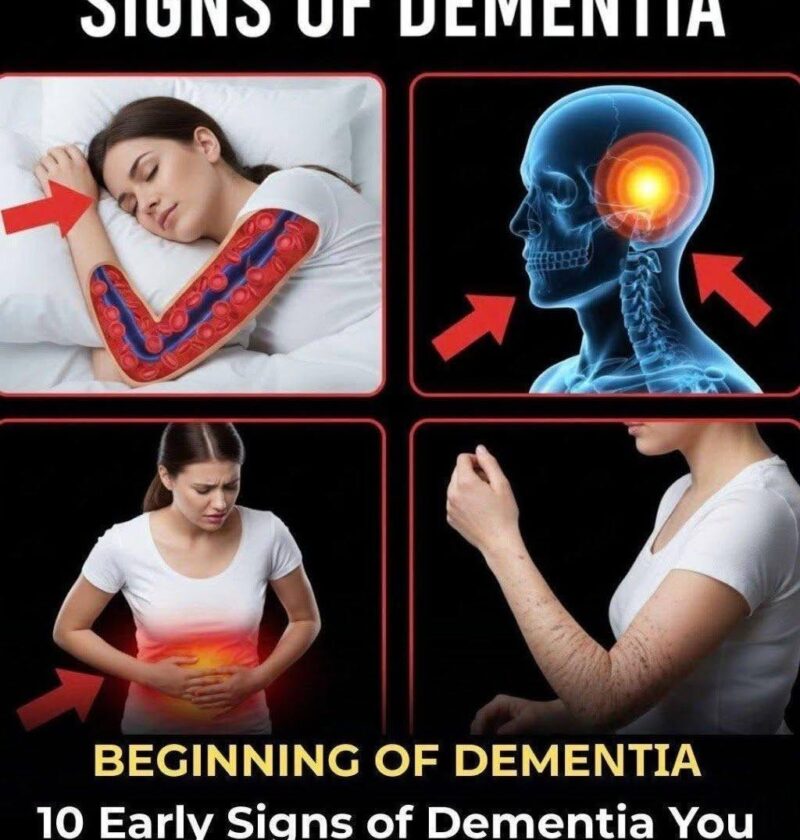
Dementia is a general term for a decline in memory, thinking, and reasoning severe enough to interfere with daily life. One common cause is Alzheimer’s disease. Early signs can be subtle, but they tend to gradually worsen over time.
Here are 10 early warning signs you should not ignore:
- Memory loss that disrupts daily life
Forgetting recently learned information, important dates, or repeatedly asking the same questions. - Difficulty planning or solving problems
Trouble following recipes, managing bills, or concentrating on tasks. - Confusion with time or place
Losing track of dates, seasons, or forgetting where you are or how you got there. - Problems with familiar tasks
Difficulty completing everyday activities like cooking, driving familiar routes, or using appliances. - Trouble understanding visual or spatial information
Difficulty judging distances, reading, or recognizing faces. - New problems with words in speaking or writing
Struggling to follow conversations or finding the right words. - Misplacing things and losing the ability to retrace steps
Putting items in unusual places and being unable to find them later. - Poor judgment or decision-making
Giving away money, poor financial decisions, or neglecting personal hygiene. - Withdrawal from work or social activities
Avoiding hobbies, social events, or conversations due to confusion or embarrassment. - Mood and personality changes
Increased irritability, anxiety, suspicion, or depression without clear reason.
Important note:
These signs don’t always mean dementia. They can also be caused by:
- Depression
- Vitamin deficiencies
- Thyroid problems
- Medication side effects
- Stress or sleep issues
But if several of these symptoms appear and slowly worsen, it’s important to seek medical evaluation early, because early diagnosis can help with treatment and planning.
If you want, I can also explain how to tell normal aging from early dementia more clearly.