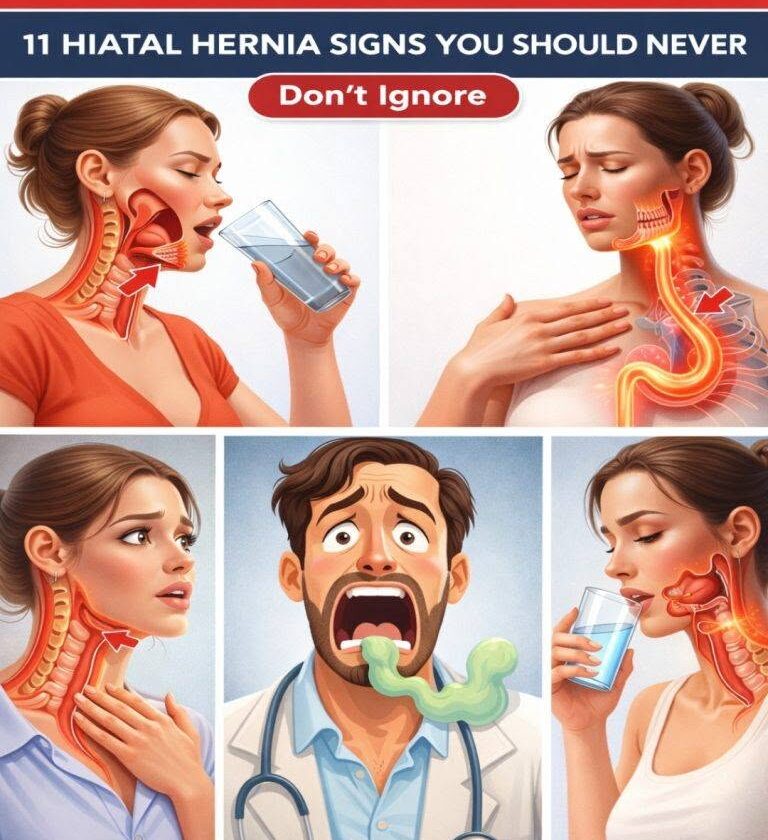
A hiatal hernia happens when part of the stomach pushes upward through the diaphragm (the muscle that separates the chest from the abdomen) and into the chest cavity. Some people have no symptoms, while others experience discomfort that can resemble acid reflux or heart problems.
Here are 10 common signs and symptoms of a hiatal hernia to know:
1. Heartburn
A burning feeling behind the breastbone, especially after eating, lying down, or bending over, is one of the most common symptoms.
2. Acid reflux
Stomach acid may flow back into the esophagus, causing a sour taste, regurgitation, or irritation in the throat.
3. Chest discomfort or pain
Some people feel pressure, burning, or discomfort in the chest. Chest pain should be taken seriously because it can also have causes unrelated to a hiatal hernia.
4. Difficulty swallowing
A hiatal hernia may contribute to a feeling that food is slow to go down or gets stuck.
5. Frequent belching
Excessive burping can occur because of changes in the position of the stomach and increased reflux.
6. Feeling full quickly
Some people experience early fullness after eating small amounts of food.
7. Bloating or abdominal discomfort
Gas, pressure, or a swollen feeling in the upper abdomen can occur.
8. Nausea
Digestive irritation or reflux may lead to nausea in some people.
9. Chronic cough or throat irritation
Reflux associated with a hiatal hernia can irritate the throat and airways, causing coughing, hoarseness, or a “lump in the throat” sensation.
10. Shortness of breath (in some cases)
Larger hiatal hernias can sometimes put pressure on nearby structures and contribute to breathing discomfort.
When to seek medical advice
Contact a healthcare professional if symptoms are persistent, worsening, or affecting daily life. Seek urgent medical care for:
- Severe or sudden chest pain
- Trouble breathing
- Vomiting blood
- Black, tarry stools
- Inability to swallow food or liquids
Diagnosis is usually made through evaluation by a clinician and may involve tests such as an upper endoscopy, imaging studies, or specialized reflux testing. Many people manage symptoms with lifestyle changes and medications, while some larger or complicated hernias may require additional treatment.