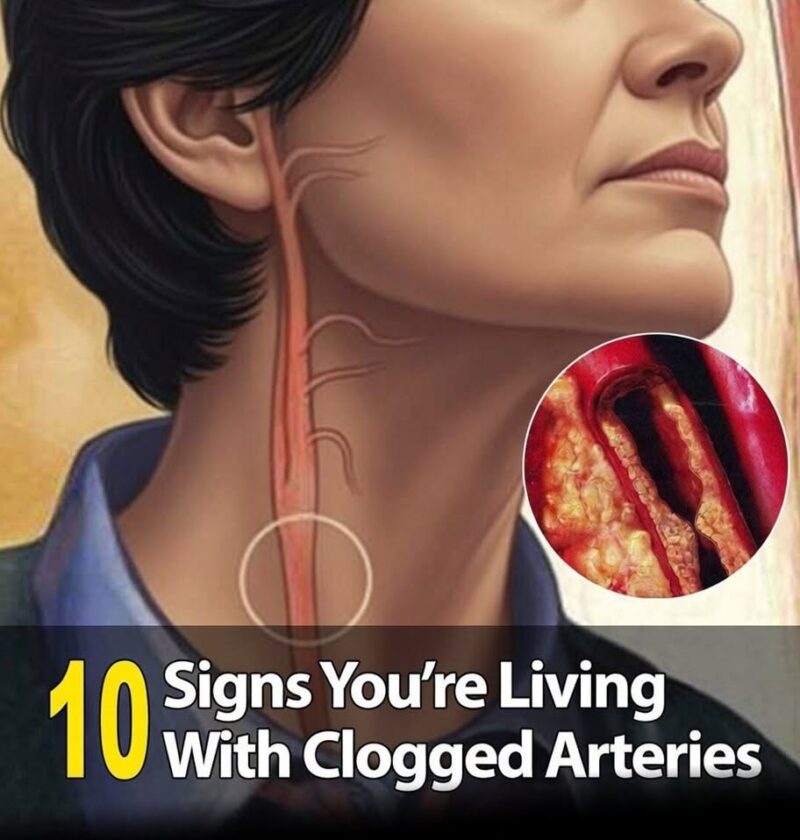
The title “10 Indicators of Blocked Arteries You Shouldn’t Ignore” is partly based on real medical warning signs, but it’s often exaggerated online. “Blocked arteries” usually refers to atherosclerosis, where fatty plaques narrow blood vessels over time, increasing the risk of heart attack and stroke.
A related condition is Coronary Artery Disease.
⚠️ Possible warning signs of narrowed or blocked arteries
1. Chest pain or pressure (angina)
- Often triggered by activity or stress
- May feel like squeezing or heaviness
2. Shortness of breath
- Especially during exertion
3. Pain in arms, neck, jaw, or back
- Can radiate from the heart
4. Fatigue or reduced exercise tolerance
- Feeling unusually tired with activity
5. Cold or numb hands/feet
- Possible reduced circulation
6. Leg pain when walking (claudication)
- Pain improves with rest
7. Slow-healing wounds (especially in legs/feet)
8. Dizziness or lightheadedness
- Reduced blood flow in some cases
9. Heart palpitations or irregular heartbeat
10. In severe cases: sudden chest pain at rest
- May signal a heart attack (medical emergency)
🚨 Important reality check
- Many of these symptoms are not specific to blocked arteries
- Conditions like anxiety, muscle strain, lung disease, or anemia can cause similar symptoms
- Some people have no symptoms until a serious event occurs
🧭 When to seek urgent help
Call emergency services immediately if you have:
- Chest pain lasting more than a few minutes
- Pain spreading to arm, jaw, or back
- Severe shortness of breath
- Sudden collapse or sweating with chest discomfort
❤️ Bottom line
Blocked arteries develop slowly over years, and symptoms can be subtle or absent. The most important risk factors are:
- High blood pressure
- High cholesterol
- Smoking
- Diabetes
- Sedentary lifestyle
If you want, I can also explain early lifestyle changes that actually help prevent artery blockage (diet, walking, sleep, etc.) in a simple plan.