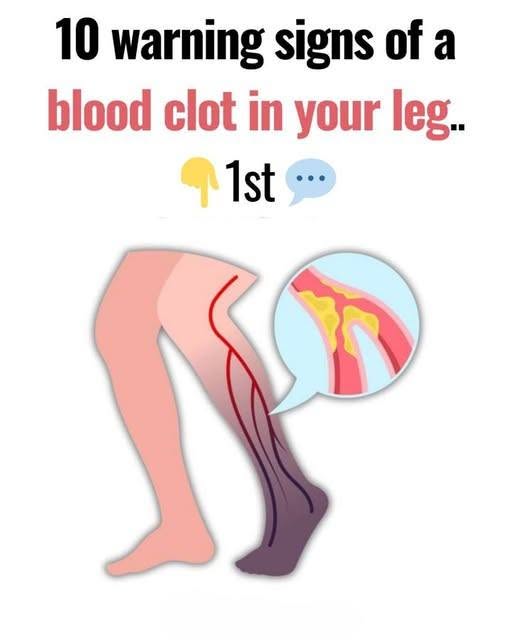
A blood clot in the leg—often called deep vein thrombosis (DVT)—can be serious because a clot may travel to the lungs and cause a pulmonary embolism. Some people have few or no symptoms, but possible warning signs include:
10 warning signs of a blood clot in the leg
- Swelling in one leg
- Especially when one calf, ankle, or foot becomes noticeably larger than the other.
- Leg pain or tenderness
- Often felt in the calf or thigh and may feel like a cramp or soreness.
- Warmth over the affected area
- The skin around the clot may feel warmer than the surrounding area.
- Redness or discoloration
- The skin may appear red, purple, or darker than usual.
- A feeling of heaviness or tightness
- The leg may feel unusually heavy, full, or tense.
- Swollen veins that become more visible
- Surface veins may look more prominent or feel tender.
- Pain that worsens when walking or standing
- Movement or pressure on the leg may increase discomfort.
- Unexplained leg fatigue or aching
- A persistent dull ache without an obvious injury can be a warning sign.
- Sudden changes in one leg only
- New swelling, pain, or color changes affecting one side are more concerning than equal changes in both legs.
- Signs of a possible pulmonary embolism (emergency)
- Sudden shortness of breath
- Chest pain (especially with breathing)
- Rapid heartbeat
- Coughing up blood
- Feeling faint or dizzy
When to seek medical help
Seek urgent medical care if you develop sudden one-sided leg swelling, pain, warmth, or redness, especially if you have risk factors such as recent surgery, long travel, prolonged immobility, cancer, pregnancy/postpartum, hormone therapy, smoking, or a previous clot.
A leg symptom alone does not confirm a blood clot—many other conditions can cause similar symptoms—but a suspected DVT should be evaluated promptly because early treatment can reduce complications.