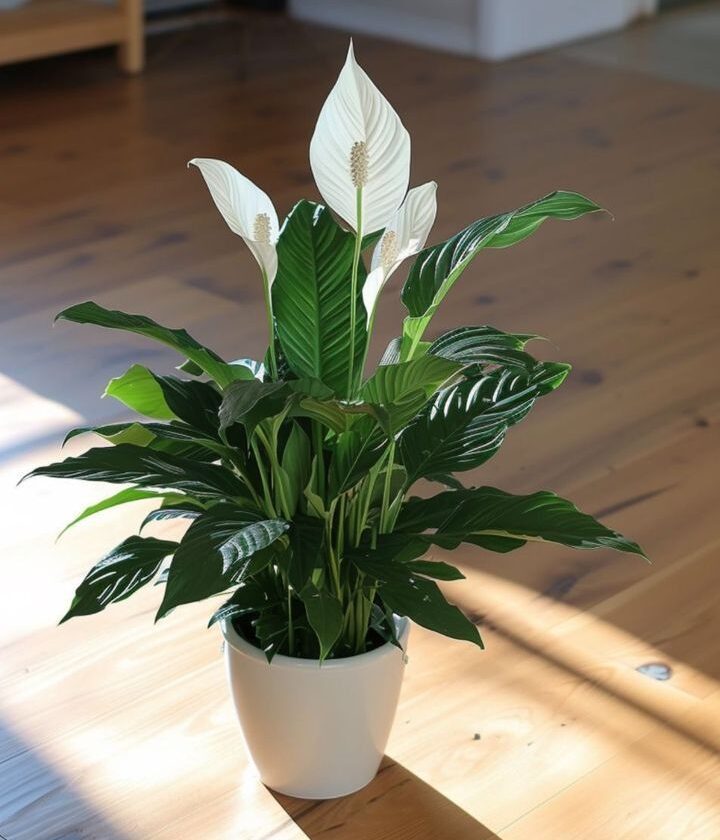
Here’s what actually helps it flower:
Peace lilies need bright, indirect light to bloom well. They survive in low light, but flowering usually stops there. Near a window with filtered sun is ideal.
They also respond to stable watering habits—keep the soil lightly moist, but never soggy. Letting it dry out too much repeatedly can delay flowering.
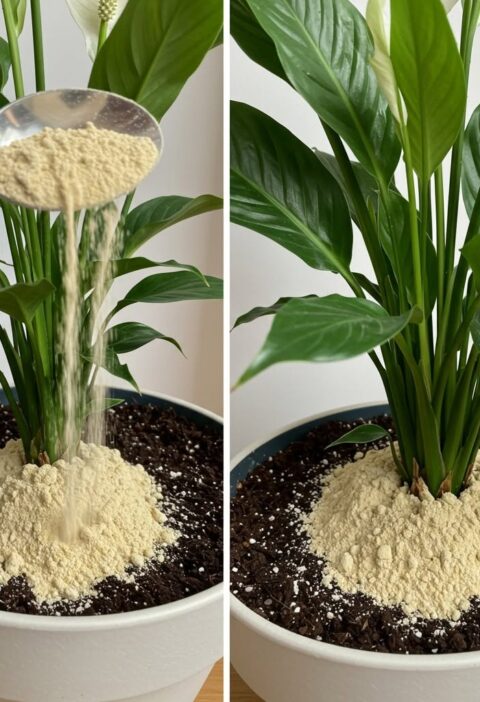
A light feeding schedule during spring and summer (balanced houseplant fertilizer every month or so) can support blooms, but overfeeding—especially with nitrogen-heavy fertilizer—often gives you leaves instead of flowers.
Temperature and humidity matter too. They prefer warm, steady indoor conditions and higher humidity, so cold drafts or very dry air can reduce blooming.
Another real factor is plant maturity and stress level. Young plants or recently repotted ones often focus on root and leaf growth first before flowering.
One thing viral posts usually leave out: peace lilies don’t bloom constantly. Even in good conditions, they flower in cycles and may take breaks.
So the “11 ways” type articles usually just break these basics into multiple steps rather than revealing anything new.
If yours isn’t blooming, tell me where you keep it (light, watering, pot size), and I can pinpoint what’s actually holding it back.