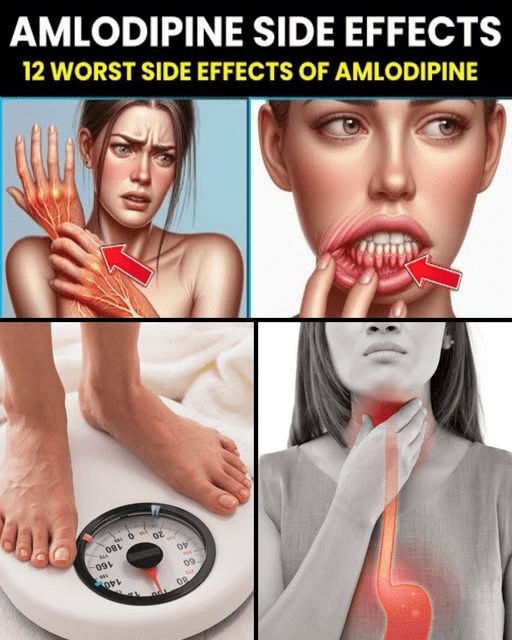
Amlodipine is generally well tolerated, but like all blood pressure medicines, it can cause side effects—some mild, some more serious. The “worst side effects” are rare, but important to recognize early so you can seek medical help if needed.
Here are 12 serious or potentially concerning side effects you should take seriously if they occur:
1. Severe low blood pressure (hypotension)
Can cause dizziness, fainting, or feeling like you might pass out—especially when standing up quickly.
2. Fast or irregular heartbeat (palpitations/arrhythmia)
A noticeable racing, pounding, or uneven heartbeat can signal a cardiovascular reaction.
3. Severe swelling (edema)
Especially in the legs, ankles, or feet. Mild swelling is common, but sudden or severe swelling needs attention.
4. Chest pain (angina worsening)
In rare cases, chest pain may worsen when starting or adjusting the dose.
5. Heart attack (rare but serious)
Very uncommon, but risk may increase in people with severe underlying coronary disease.
6. Shortness of breath
Could indicate fluid buildup, heart strain, or an allergic reaction.
7. Severe dizziness or fainting
May suggest blood pressure dropping too low.
8. Liver problems
Signs include yellowing of skin/eyes (jaundice), dark urine, or persistent nausea.
9. Severe allergic reaction (anaphylaxis)
Symptoms: rash, itching, swelling of face/lips/tongue, trouble breathing.
10. Gum overgrowth (gingival hyperplasia)
Swollen, bleeding, or tender gums—develops gradually but can become significant.
11. Extreme fatigue or weakness
When severe, it may indicate excessive blood pressure lowering or heart-related effects.
12. Fluid retention in lungs (rare pulmonary edema)
Can cause coughing, breathlessness, or feeling of suffocation when lying down.
Important context
Most people taking Amlodipine experience only mild side effects like ankle swelling, flushing, or mild dizziness—especially at the beginning.
Serious effects are uncommon, but you should seek medical attention urgently if you notice:
- Chest pain
- Severe breathing difficulty
- Fainting
- Swelling of face or throat
If you want, I can also explain:
- how to reduce amlodipine side effects
- whether swelling is dangerous or normal
- safe alternatives if you’re not tolerating it well