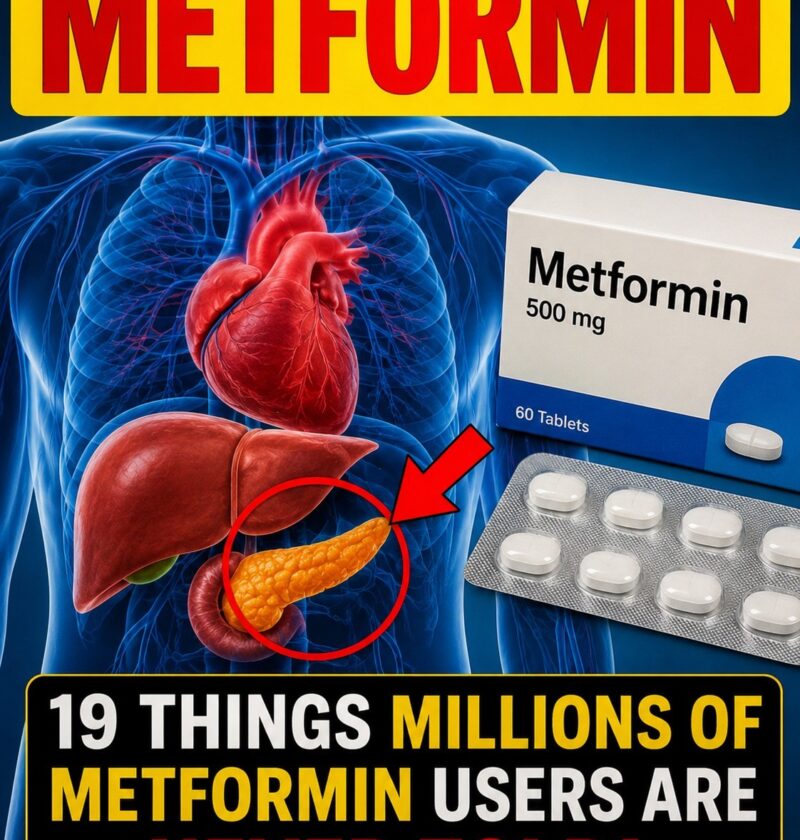
Metformin is one of the most widely used medications for Type 2 Diabetes management, and because it’s been around for decades, a lot of its “less obvious” effects don’t always get explained in routine consultations. The headline you shared is styled like a clickbait health article, so it helps to separate what’s well-established from what’s uncertain or overstated.
Here’s a grounded breakdown of 19 important, lesser-discussed facts about Metformin, including its effects on vitamin B12, liver, and gut.
1. It can lower vitamin B12 over time
Long-term use is linked with reduced absorption of vitamin B12 in some people.
2. The B12 issue is gradual, not immediate
Deficiency usually develops after years, not weeks or months.
3. Symptoms of low B12 can be subtle
Fatigue, tingling in hands/feet, brain fog, or mild anemia may appear slowly.
4. Routine B12 monitoring is often recommended
Many guidelines suggest periodic blood checks for long-term users.
5. It doesn’t damage the liver (in most cases)
Contrary to online claims, metformin is not toxic to the liver and is often considered safe in mild liver disease.
6. It is actually avoided in severe liver failure
Not because it harms the liver directly, but because of metabolic risk (lactic acidosis).
7. The “liver detox” idea is misleading
It doesn’t “clean” or “strain” the liver in a detox sense—those claims are not evidence-based.
8. It changes gut bacteria significantly
Metformin alters the gut microbiome composition, which may partly explain its benefits and side effects.
9. Some gut changes may be beneficial
Certain bacterial shifts are linked to improved glucose control.
10. Some gut changes may cause side effects
Gas, bloating, and diarrhea are very common early on.
11. Diarrhea is the most common side effect
Especially when starting or increasing the dose.
12. Extended-release versions are easier on the stomach
They often reduce gastrointestinal discomfort.
13. It may reduce appetite slightly
This can contribute to modest weight loss in some people.
14. It is not a weight-loss drug
Any weight change is usually mild and variable.
15. It reduces glucose production in the liver
One of its main mechanisms is lowering excess glucose output.
16. It does not cause hypoglycemia alone
Low blood sugar is rare unless combined with other diabetes medications.
17. It may affect energy metabolism in cells
It influences mitochondrial activity, which is part of its glucose-lowering effect.
18. Long-term benefits go beyond blood sugar
Studies suggest possible cardiovascular risk reduction in some patients.
19. Not everyone tolerates it well
Some people experience persistent GI issues and may need dose adjustment or alternatives.
Bottom line
Metformin is generally safe, well-studied, and highly effective—but like any long-term medication, it has underappreciated effects, especially on vitamin B12 absorption and gut function. The liver-related claims you often see online are usually exaggerated or misunderstood.