Smart Emergency Meat Thawing Guide for Fast, Safe & Tender Cooking
🧊 When Dinner Is Frozen: A Real Kitchen Problem Solved
Every home cook has experienced it: it’s late afternoon, hunger is rising, and dinner plans are ready—only to realize the meat is still rock solid in the freezer. Whether it’s chicken breast, beef steak, or minced meat, frozen protein can feel like a complete roadblock to cooking.
This is where fast frozen meat thawing techniques, quick defrosting methods, and safe kitchen shortcuts become essential. However, the key is not just speed—it’s food safety, texture preservation, and flavor protection.
In professional kitchens, chefs do not simply “rush thaw” meat randomly. Instead, they rely on controlled methods that balance temperature, hygiene, and heat transfer.
⚠️ Why Proper Thawing Matters More Than Speed
Before exploring fast methods, it’s important to understand what is at risk.
When meat thaws incorrectly:
- The outer layer can warm too quickly while the center stays frozen
- Bacteria can multiply on the surface
- Texture may become rubbery or dry after cooking
- Natural juices can be lost
This is especially important for chicken, minced meat, and seafood, which are more sensitive than whole cuts.
That’s why experts in food safety cooking practices always recommend controlled thawing instead of room-temperature defrosting.
❄️ The Science Behind Quick Thawing
Thawing works through heat transfer:
- Cold moves out of the meat
- External heat (water, metal, or air) replaces it
The faster and more evenly heat is transferred, the better the result.
This is why:
- Metal conducts heat faster than plastic
- Water thaws faster than air
- Thin portions thaw faster than thick blocks
Understanding this is the foundation of all quick meat defrosting techniques for home cooking.
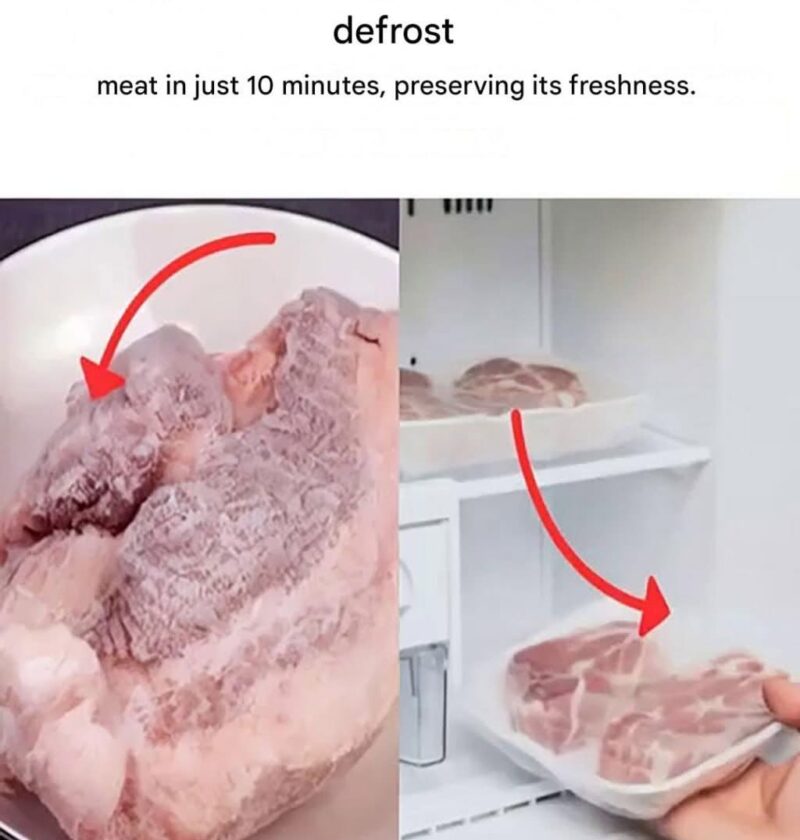
🍳 Method 1: The Safe Two-Pan Heat Transfer Technique
One of the most popular emergency kitchen hacks is often called the “two-pan thawing method.”
Instead of claiming unrealistic timing, professional chefs use it as a controlled pressure + conduction thawing system.
How it works:
- Two heavy pans are used
- The frozen meat is placed between them
- The weight helps increase surface contact
- Heat transfers evenly from the surrounding environment and metal
Why it is effective:
- Metal speeds up thermal conduction
- Pressure increases contact surface area
- More even thawing compared to air exposure
Important safety note:
This method works best for:
- Thin cuts of meat
- Small steaks or fillets
- Flattened portions
It is NOT suitable for:
- Large frozen roasts
- Whole chickens
This method is widely used in emergency cooking situations and quick meal prep routines, but it still requires monitoring.
💧 Method 2: Cold Water Fast Defrosting (Most Reliable)
One of the safest and fastest methods used globally in home cooking and professional kitchens is cold water thawing.
Steps involved:
- Seal meat in a leak-proof bag
- Submerge in cold water
- Change water every 20–30 minutes
- Cook immediately after thawing
Why it works:
- Water transfers heat faster than air
- Keeps meat out of unsafe temperature zones
- Preserves texture and moisture
This is considered one of the most trusted safe meat thawing methods recommended by food safety authorities.
🔥 Method 3: Microwave Quick Defrosting (Emergency Only)
Modern microwaves include a defrost setting designed for rapid thawing.
Benefits:
- Extremely fast
- Useful in urgent cooking situations
Limitations:
- Can partially cook edges
- May dry out thin areas
- Requires immediate cooking afterward
This is best used only in true last-minute dinner preparation emergencies.
🧠 Method 4: Thin-Cut Acceleration Technique (Chef Trick)
Professional chefs often flatten meat before freezing or during thawing.
Why this matters:
- Thinner meat = faster heat penetration
- Even thawing reduces texture damage
- Ideal for stir-fry or quick pan cooking
This is a core principle in efficient meal prep and freezer cooking strategies.
🍽️ How to Maintain Flavor and Tenderness After Quick Thawing
Fast thawing can sometimes affect texture, but it can be controlled:
Best practices:
- Cook immediately after thawing
- Avoid refreezing thawed raw meat
- Use marinades to restore moisture
- Pat dry before cooking for better browning
These steps help maintain juicy, tender meat texture even after rapid defrosting.
⚖️ Food Safety Reminder (Very Important)
Avoid these unsafe practices:
- Leaving meat at room temperature for long periods
- Using hot water for thawing
- Partial thawing followed by long storage
These increase bacterial risk significantly.
🧾 Final Thoughts on Fast Meat Thawing Techniques
Emergency cooking does not have to mean compromised safety or quality. By understanding heat transfer principles, safe thawing methods, and smart kitchen shortcuts, you can confidently prepare meals even when food is frozen solid.
From the two-pan pressure method to cold water defrosting, each technique has its place in modern home cooking. The key is choosing the right method for the right situation.
With proper handling, even last-minute dinners can turn into delicious, well-prepared meals without stress.
📌 Source
Adapted from general culinary science principles, USDA food safety guidelines, and professional kitchen thawing practices used in modern cooking techniques.
🍖 PART 2: Simple Emergency Meat Thawing Guide
Ingredients / Tools Needed
- 2 heavy metal pans (same size preferred)
- Frozen meat (steak, chicken, or small cuts)
- Cold water (for alternative method)
- Microwave (optional emergency option)
Instructions
1. Two-Pan Quick Thaw Method
- Place frozen meat on a flat surface.
- Put one heavy pan underneath and one on top.
- Apply gentle pressure and leave for several minutes.
- Flip occasionally for even thawing.
- Cook immediately after softening.
2. Cold Water Fast Defrost Method
- Seal meat in a waterproof bag.
- Submerge in cold water.
- Replace water every 20–30 minutes.
- Cook right after thawing is complete.
3. Microwave Defrost (Emergency Use Only)
- Place meat on microwave-safe plate.
- Use defrost setting in short intervals.
- Rotate meat frequently.
- Cook immediately after thawing.