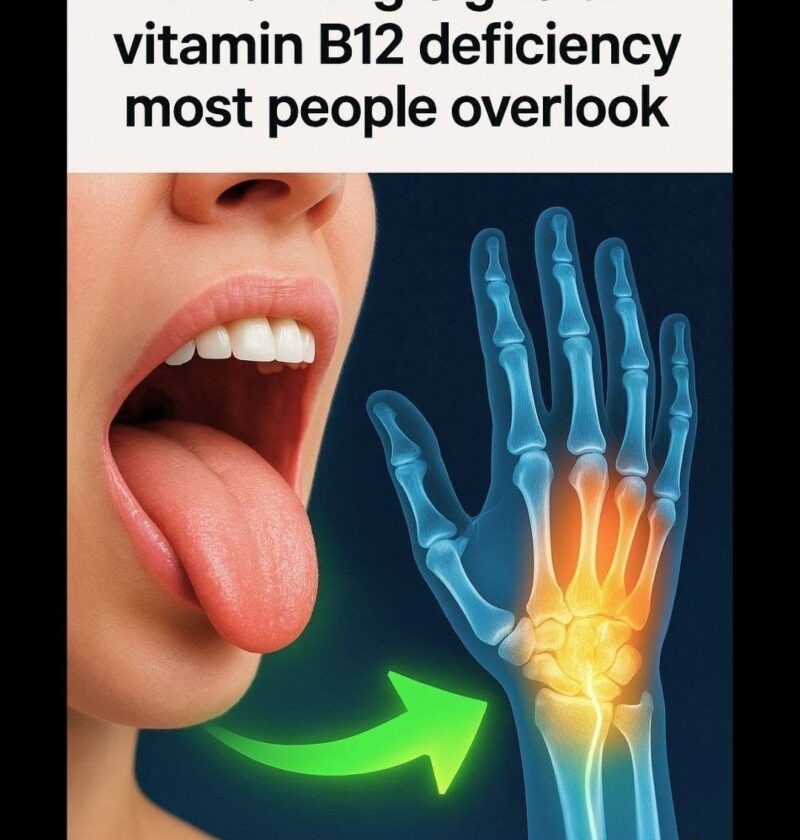
Vitamin B12 deficiency happens when the body doesn’t get enough B12 from diet or can’t absorb it properly (common in older adults, vegans, and people with stomach or intestinal issues).
Here are 4 important symptoms that should not be ignored—especially if they persist or worsen:
1) Tingling, numbness, or “pins and needles”
This often starts in the hands or feet.
It happens because low B12 damages the protective covering of nerves.
If untreated, it can become permanent nerve damage.
2) Extreme fatigue and weakness
Not just normal tiredness—this is a deep exhaustion that doesn’t improve with rest.
It occurs because B12 is needed to make healthy red blood cells. Without it, oxygen delivery drops.
3) Memory problems or brain fog
- Difficulty concentrating
- Forgetfulness
- Feeling mentally “slow”
Severe deficiency can even mimic dementia-like symptoms in older adults.
4) Pale skin, dizziness, or shortness of breath
These are signs of anemia caused by low B12:
- Pale or yellowish skin
- Feeling lightheaded
- Getting winded easily
This happens due to reduced healthy red blood cells.
Why it matters
Untreated B12 deficiency can lead to:
- Permanent nerve damage
- Cognitive decline
- Severe anemia complications
The good news: if caught early, it’s usually treatable and reversible with supplements or injections.
When to check with a doctor
If someone has a combination of:
- Tingling + fatigue
- Memory issues + weakness
- Or symptoms lasting more than a few weeks
A simple blood test can confirm it.
If you want, I can explain the main causes of B12 deficiency or the best food sources (especially for vegetarians).