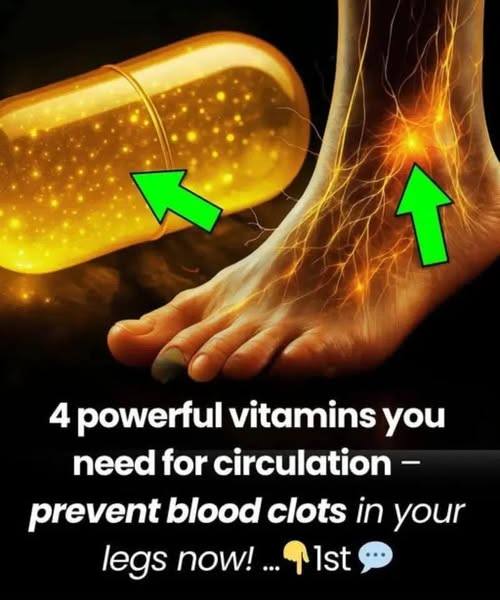
That headline is misleading. No vitamin can reliably “prevent blood clots in your legs now.” Blood clot formation depends on factors like blood flow, vessel health, genetics, hydration, mobility, and medical conditions—not just vitamins.
A clot in the leg usually refers to Deep vein thrombosis, which can be serious and sometimes life-threatening if it travels to the lungs.
🟡 What vitamins actually do (real science)
Some vitamins support normal blood vessel function and circulation, but they do not replace medical prevention or treatment.
1. Vitamin E
- Helps protect blood vessel cells from oxidative stress
- Has mild effects on blood “stickiness,” but not strong enough to prevent clots alone
2. Vitamin C
- Supports blood vessel strength
- Helps maintain healthy connective tissue in veins
3. Vitamin K
- Important for normal clotting function
- Not a clot-preventing vitamin—it actually helps blood clot normally
4. Vitamin B3
- Can improve blood flow by widening blood vessels in higher doses
- Must be used carefully due to side effects at high doses
🧠 What actually helps prevent dangerous clots
Evidence-based measures include:
- Regular movement (especially on long flights or sitting long hours)
- Staying hydrated
- Maintaining healthy weight
- Avoiding smoking
- Managing conditions like diabetes or high blood pressure
- Medical blood thinners when prescribed
🚨 Important warning signs of a clot
Seek urgent care if you notice:
- Swelling in one leg
- Pain or tenderness in calf/thigh
- Warmth or redness in the area
- Sudden shortness of breath or chest pain (emergency)
🧾 Bottom line
Vitamins can support general vascular health, but they do not prevent or treat blood clots in a direct or reliable way. Claims like “4 powerful vitamins to stop clots” are marketing exaggerations.
If you want, I can give you a real risk-reduction checklist for circulation problems and clots based on medical guidelines.