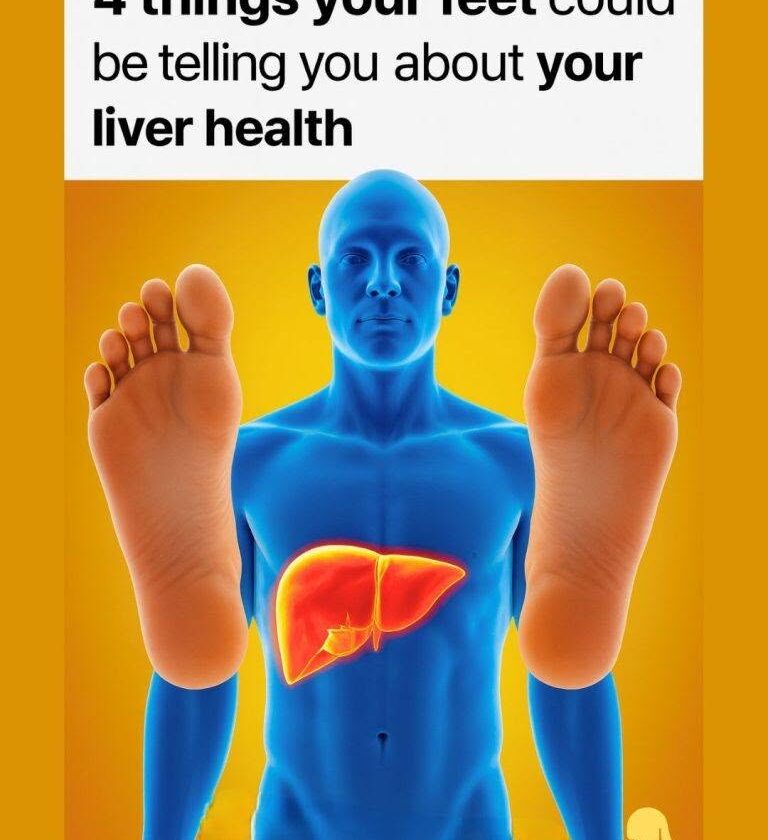
Here are 4 things your feet could be telling you about your liver health:
1. Swollen feet or ankles (fluid buildup)
Persistent puffiness in the feet or ankles can happen when the liver struggles to maintain normal fluid balance and protein levels in the blood.
This is often seen in more advanced liver conditions, including Cirrhosis.
If the swelling worsens by evening or doesn’t go away with rest, it’s more concerning.
2. Itchy feet without a clear skin cause
Ongoing itching—especially if it’s deep, persistent, and not linked to allergies or fungal infection—can sometimes be related to bile flow problems in the liver.
This may occur in conditions like Hepatitis or other cholestatic liver disorders.
Itching that is worse at night or not relieved by creams deserves attention.
3. Yellowish discoloration of the skin on the feet
When liver function declines, bilirubin can build up in the body, leading to yellowing of the skin. While most people notice it in the eyes first, it can also appear on the soles of the feet in more noticeable cases.
This is usually a sign that the liver is not processing waste properly and should not be ignored.
4. Slow healing cuts or easy bruising on feet
Small injuries on the feet that take unusually long to heal—or bruising from minor bumps—can suggest reduced liver function affecting clotting factors and nutrient processing.
This becomes more relevant when combined with other symptoms like fatigue or swelling.
Bottom line
Feet changes alone don’t confirm liver disease, but when they appear alongside symptoms like fatigue, abdominal swelling, or dark urine, they may point toward liver stress or disease progression.
If you want, I can also explain early vs late liver warning signs or how to tell liver-related swelling apart from kidney or heart-related swelling.