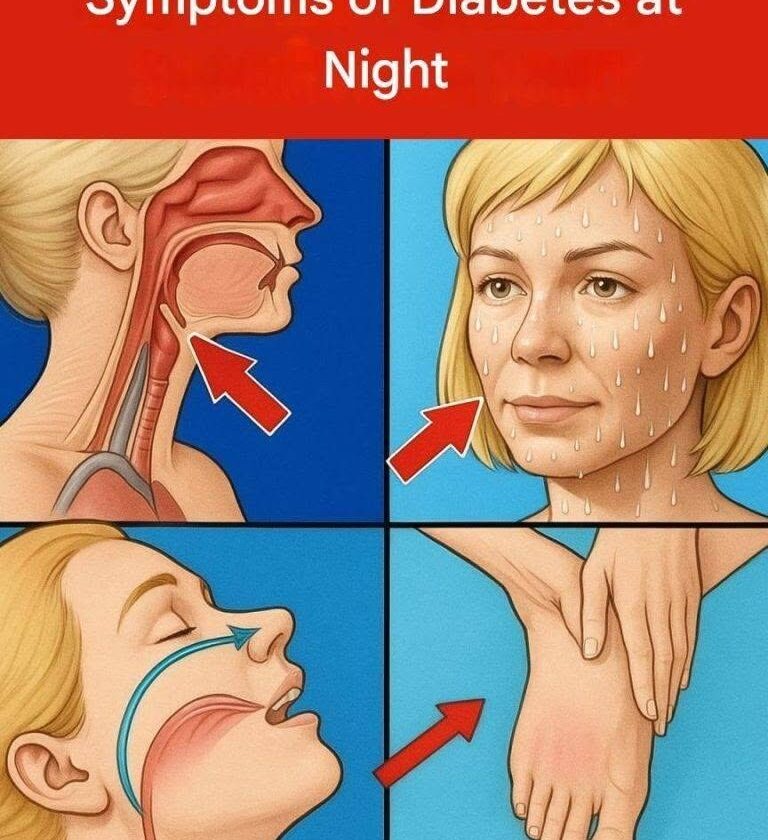
Here are 5 common diabetes-related symptoms that often show up or become more noticeable at night. These can occur in Type 1 or Type 2 Diabetes and are often linked to blood sugar being too high or too low during sleep.
🌙 1. Frequent nighttime urination (nocturia)
People with high blood sugar may need to urinate multiple times at night.
Why it happens:
- Excess glucose in blood pulls water into urine
- Kidneys work harder to remove sugar
What you notice:
- Waking up 2–5 times to urinate
- Interrupted sleep
🌙 2. Night sweats or sudden sweating
This can happen when blood sugar drops too low during sleep.
Why:
- Low blood sugar triggers stress hormones (like adrenaline)
What it feels like:
- Waking up sweaty or drenched
- Sometimes with shaking or anxiety
🌙 3. Nighttime hunger or waking up hungry
Blood sugar fluctuations can trigger strong hunger at night.
Why:
- Body thinks it is “starving” due to glucose imbalance
What you notice:
- Sudden urge to eat at night
- Difficulty sleeping without food
🌙 4. Restless sleep or insomnia
Unstable blood sugar can disrupt normal sleep cycles.
Possible reasons:
- High blood sugar causes discomfort and dehydration
- Low blood sugar causes adrenaline release
What you notice:
- Trouble falling asleep
- Waking up repeatedly
🌙 5. Tingling, burning, or leg discomfort
This is often related to diabetic nerve changes (neuropathy).
Why it worsens at night:
- Less distraction makes sensations more noticeable
- Blood flow changes when lying down
What it feels like:
- Tingling in feet or legs
- Burning or “pins and needles”
- Restless legs sensation
⚠️ Important note
These symptoms do not automatically mean diabetes, because they can also come from:
- Stress or anxiety
- Kidney problems
- Poor sleep habits
- Hormonal issues
- Medications
A proper diagnosis requires:
- Fasting blood sugar test
- HbA1c test (average 3-month sugar level)
🩺 Bottom line
Nighttime symptoms can sometimes be an early clue of blood sugar imbalance, especially when several occur together—but they need lab testing to confirm Diabetes (Type 2 Diabetes) or any other condition.
If you want, I can also explain:
- Early warning signs of diabetes during the day
- Normal vs dangerous blood sugar levels
- What to eat at night to prevent sugar spikes