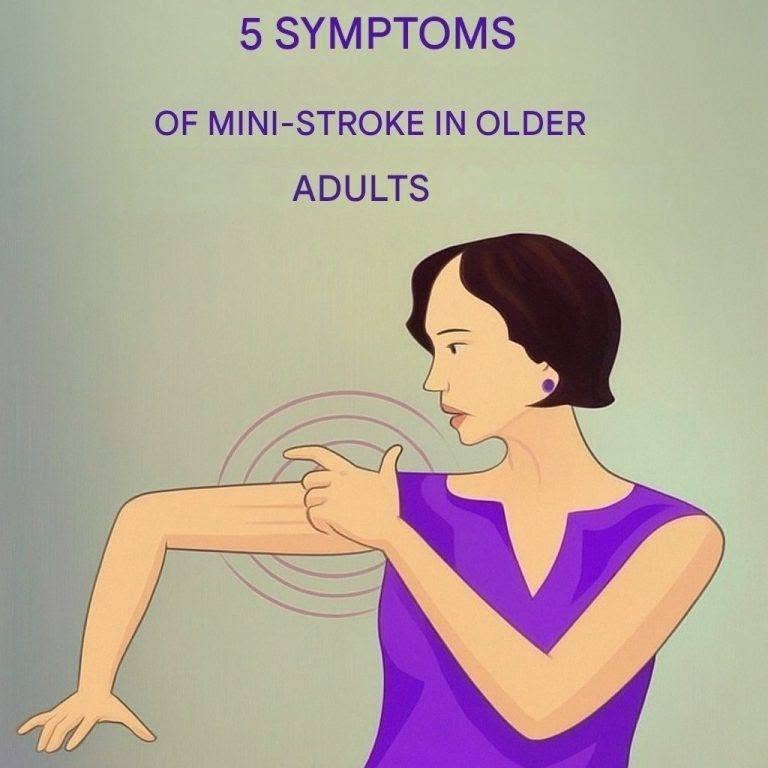
A mini-stroke, also called a transient ischemic attack (TIA), happens when blood flow to part of the brain is temporarily interrupted. Symptoms usually last only a few minutes to an hour, though they can persist for up to 24 hours. Even if they disappear completely, a TIA is a medical emergency because it can be an early warning of a major stroke.
5 Symptoms of a Mini-Stroke in Seniors That Shouldn’t Be Ignored
- Sudden weakness or numbness on one side of the body
- A drooping face, weak arm, or numb leg—especially on one side—is one of the most common warning signs.
- Difficulty speaking or understanding speech
- Speech may become slurred, words may be hard to find, or the person may have trouble understanding what others are saying.
- Sudden vision changes
- Blurred vision, double vision, or temporary loss of vision in one or both eyes can occur.
- Loss of balance or coordination
- Sudden dizziness, trouble walking, poor coordination, or unexplained falls may signal a TIA.
- Sudden confusion or a severe headache
- A sudden, unusual headache (especially if severe) or abrupt confusion can occur, although headaches are less common with TIAs than with some other types of stroke.
Remember the FAST warning signs
Use the FAST acronym to recognize a possible stroke:
- F – Face: Ask the person to smile. Does one side droop?
- A – Arms: Ask them to raise both arms. Does one drift downward?
- S – Speech: Is speech slurred or difficult to understand?
- T – Time: Call emergency services immediately if you notice any of these signs.
Why immediate care matters
Even if symptoms resolve within minutes, do not ignore them. A TIA can be a warning that a full stroke may occur in the coming hours or days. Prompt evaluation allows healthcare providers to identify the cause and start treatments that can significantly reduce the risk of a future stroke.
If you or someone else is experiencing these symptoms right now, call your local emergency services immediately rather than waiting to see if they improve.