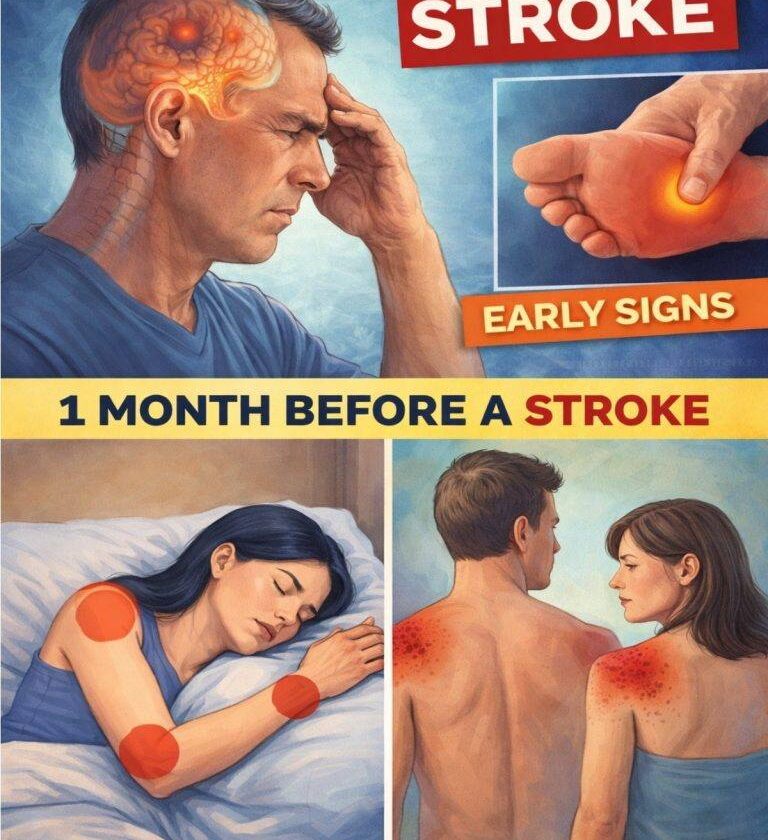
That headline is clickbait. Stroke warning signs don’t usually follow a neat “8 signs + miracle tip #6” formula, and anything suggesting a guaranteed life-saving trick should be treated skeptically.
What is medically supported is this: a significant number of strokes are preceded by mini-strokes (TIAs) or early neurological symptoms days to weeks before a full event.
Here’s a clear, evidence-based breakdown.
Early Warning Signs That May Appear Days to Weeks Before a Stroke
These can come and go, especially in the case of a transient ischemic attack (TIA):
1. Sudden brief weakness or numbness
Often on one side of the face, arm, or leg. Even if it resolves in minutes, it matters.
2. Temporary speech problems
Slurred speech, trouble finding words, or confusion while speaking.
3. Short episodes of vision loss or blurring
Especially in one eye (“curtain coming down” sensation).
4. Repeated dizziness or loss of balance
Not just lightheadedness—true coordination issues.
5. Sudden severe headaches
Especially unusual headaches with no clear cause (more concerning if different from your normal pattern).
6. Transient confusion or cognitive fog
Difficulty understanding simple things or sudden disorientation.
7. Brief difficulty walking or coordination issues
Feeling unsteady, veering to one side.
8. Tingling or “pins and needles” episodes
Especially when it happens suddenly and on one side of the body.
👉 These can last minutes to hours and may fully resolve—this is why many people ignore them. But they can be a warning of an upcoming Stroke.
Why These Symptoms Happen
Most early symptoms are caused by temporary interruptions in blood flow to the brain (TIA). A TIA is often a major red flag that a full stroke risk is high in the near future.
9 Evidence-Based Ways to Reduce Stroke Risk
1. Control blood pressure (most important)
High blood pressure is the #1 risk factor.
2. Manage blood sugar (diabetes control)
Uncontrolled diabetes damages blood vessels over time.
3. Lower LDL cholesterol
Prevents plaque buildup in arteries.
4. Stop smoking
Smoking significantly increases clot risk.
5. Exercise regularly
At least 150 minutes/week of moderate activity.
6. Eat a heart-healthy diet
More vegetables, fruits, whole grains; less trans fats and processed foods.
7. Treat heart rhythm problems
Conditions like atrial fibrillation can form clots that travel to the brain.
8. Maintain healthy weight and waist size
Abdominal fat is strongly linked to vascular disease.
9. Don’t ignore TIAs or brief neurological symptoms
Immediate medical evaluation can prevent a full stroke.
Important Reality Check
- There is no single “hidden trick” that guarantees stroke prevention.
- The biggest gains come from long-term control of vascular risk factors.
- Any sudden neurological symptom—even if it disappears—deserves urgent medical attention.
If you want, I can also break down:
- how to recognize stroke in under 30 seconds (FAST test),
- or the difference between migraine aura vs mini-stroke (they’re often confused).