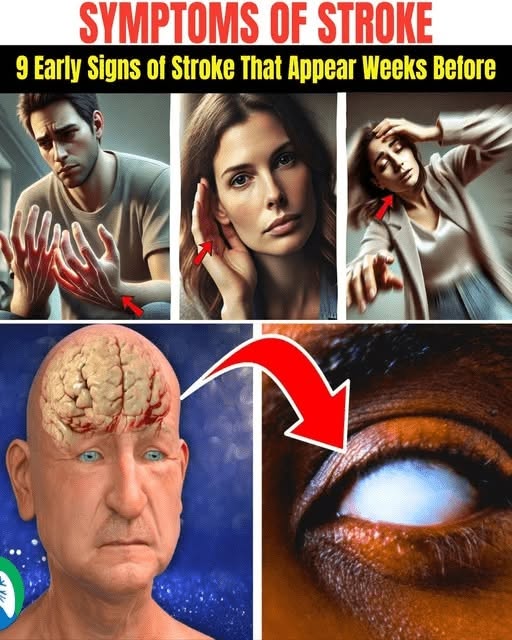
What matters is not a fixed “7-day timeline,” but early neurological symptoms that come and go or appear suddenly and should never be ignored.
Here are important warning signs seniors should take seriously:
🚨 1. Sudden weakness or numbness (even if it goes away)
Especially on one side of the face, arm, or leg.
➡️ Can be a TIA warning.
🗣️ 2. Brief speech problems
Slurred speech, trouble finding words, or confusion that resolves.
👁️ 3. Temporary vision loss or blurring
In one or both eyes—often described as a “curtain” effect.
⚖️ 4. Sudden balance issues
Unexplained dizziness, stumbling, or coordination problems.
🧠 5. Episodes of confusion
Short periods of disorientation or difficulty understanding others.
✋ 6. Hand weakness or dropping objects
Sudden loss of grip strength that may improve later.
🤕 7. Unusual sudden headaches
Especially severe or different from usual headaches.
🚶 8. Trouble walking that comes and goes
Dragging a leg or feeling unsteady intermittently.
⏱️ 9. Short “on and off” neurological episodes
Symptoms lasting minutes to hours and then disappearing completely.
🧠 Key medical point
These intermittent symptoms are often caused by a TIA (mini-stroke):
- No permanent damage yet
- But high risk of a full stroke soon (days to weeks)
- Requires urgent medical evaluation
🚨 FAST reminder (emergency rule)
- Face drooping
- Arm weakness
- Speech difficulty
- Time to call emergency help immediately
⚠️ Bottom line
There is no guaranteed “1-week warning system,” but brief, sudden, or recurring neurological symptoms are a major red flag, especially in older adults.
If you want, I can also explain:
- how doctors diagnose TIA vs stroke risk
- or how to reduce stroke risk through daily habits and medications
- or how to tell stroke vs low blood pressure/dizziness in seniors