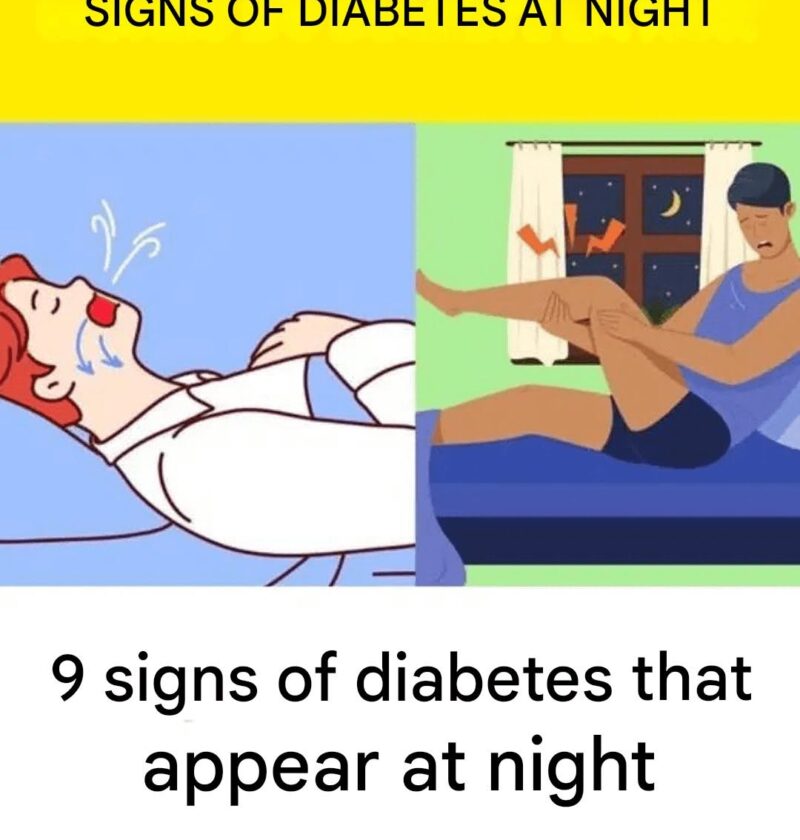
1. Frequent Urination at Night (Nocturia)
High blood sugar can cause the kidneys to remove excess glucose through urine, leading to more nighttime bathroom trips.
2. Excessive Thirst
Losing extra fluid through urination can leave you feeling unusually thirsty, including during the night.
3. Night Sweats
Low blood sugar during sleep (more common in people taking diabetes medications) can cause sweating, nightmares, and restless sleep.
4. Poor Sleep Quality
Fluctuating blood sugar levels, thirst, urination, or discomfort can disrupt sleep.
5. Restless Legs or Leg Discomfort
Some people with diabetes develop nerve damage that can cause tingling, burning, or discomfort in the legs, especially at night.
6. Numbness or Tingling in the Feet
Diabetic neuropathy often becomes more noticeable when you’re resting quietly in bed.
7. Increased Hunger, Even at Night
When the body has trouble using glucose effectively, some people experience unusual hunger.
8. Dry Mouth
Frequent urination and dehydration can lead to a dry mouth, particularly overnight.
9. Blurred Vision or Morning Vision Changes
High blood sugar can affect fluid levels in the eyes, sometimes causing vision changes.
Other Common Diabetes Symptoms
- Unexplained weight loss
- Fatigue
- Slow-healing cuts or wounds
- Frequent infections
- Increased hunger and thirst
If you’re experiencing several of these symptoms, a simple blood glucose test or an HbA1c test can help determine whether diabetes or prediabetes is present. Early diagnosis and treatment can significantly reduce the risk of complications.