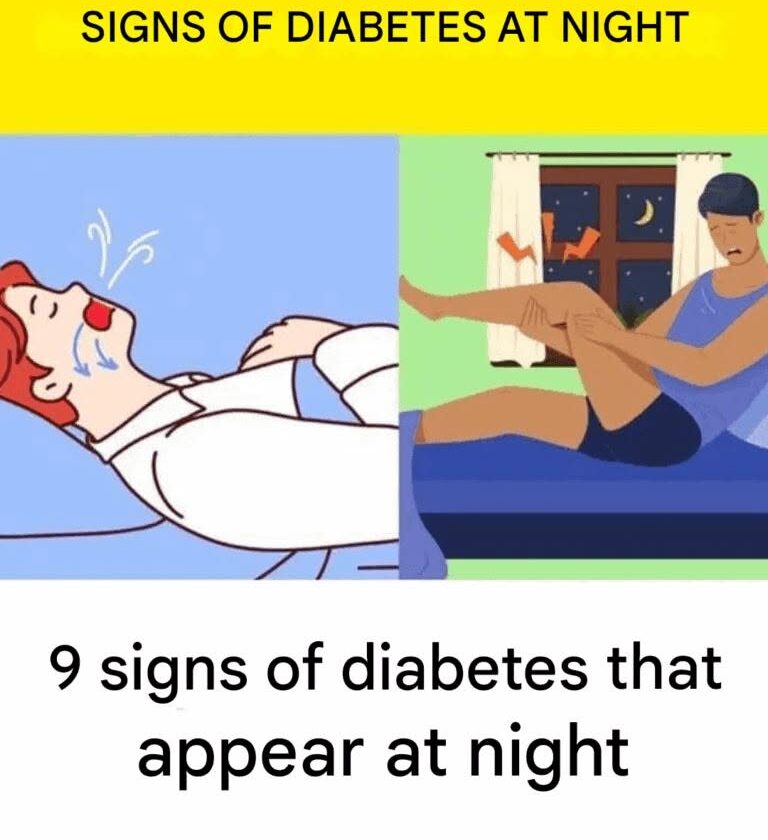
Diabetes can cause symptoms that become especially noticeable at night, although these signs are not specific enough to diagnose diabetes on their own. If someone experiences several of them, it’s worth discussing with a healthcare professional and considering blood glucose testing.
1. Frequent Urination at Night (Nocturia)
High blood sugar can cause the kidneys to remove excess glucose through urine, leading to more nighttime bathroom trips.
2. Excessive Thirst
Losing more fluid through urination can leave you feeling unusually thirsty, even during the night.
3. Night Sweats
Low blood sugar during sleep (especially in people taking diabetes medications) can sometimes cause sweating.
4. Restless Sleep
Blood sugar fluctuations may contribute to poor sleep quality and frequent awakenings.
5. Leg Cramps
Some people with diabetes experience muscle cramps, particularly if nerve damage or dehydration is present.
6. Burning, Tingling, or Numb Feet
Nerve damage from long-term high blood sugar (diabetic neuropathy) often becomes more noticeable when lying quietly in bed.
7. Increased Hunger at Night
Difficulty using glucose effectively can sometimes lead to persistent feelings of hunger.
8. Fatigue Despite Sleeping
Poor blood sugar control can leave a person feeling tired even after a full night’s sleep.
9. Symptoms of Sleep Apnea
Diabetes is associated with a higher risk of Obstructive Sleep Apnea, which may cause loud snoring, gasping during sleep, and daytime sleepiness.
Important
These symptoms can have many causes besides diabetes. The classic warning signs of diabetes include:
- Increased thirst
- Frequent urination
- Unexplained weight loss
- Increased hunger
- Blurred vision
- Fatigue
- Slow-healing wounds
If you have concerns about diabetes, a healthcare professional can evaluate symptoms and order tests such as a fasting blood glucose test or an Hemoglobin A1c test to assess blood sugar levels.