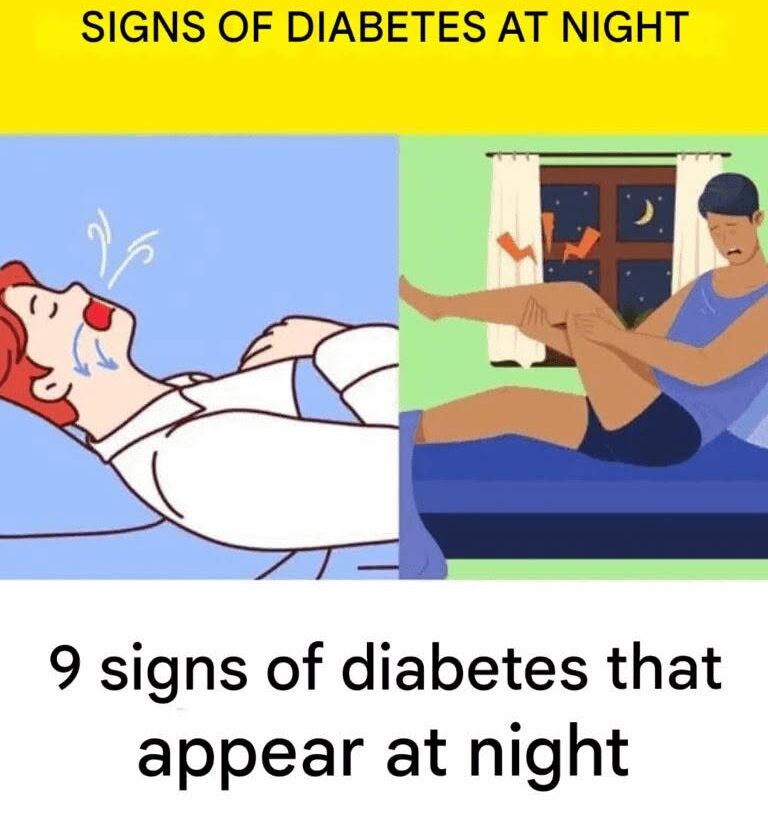
Some symptoms of Diabetes or high blood sugar can become more noticeable at night, but there is **no specific set of “9 nighttime signs” that can diagnose diabetes**. Many of these symptoms can also be caused by other conditions.
Possible nighttime symptoms include:
1. **Frequent urination (nocturia):** High blood sugar causes the kidneys to produce more urine, leading to repeated trips to the bathroom.
2. **Excessive thirst:** Increased urination can leave you dehydrated and thirsty during the night.
3. **Night sweats:** More common in people with diabetes who experience **low blood sugar during sleep**, especially if they use insulin or certain diabetes medications. Night sweats have many other possible causes as well.
4. **Poor sleep:** Waking up to urinate, feeling thirsty, or blood sugar fluctuations can disrupt sleep.
5. **Burning, tingling, or numbness in the feet:** These symptoms may be due to Diabetic Neuropathy and are often more noticeable at night.
6. **Leg cramps:** Some people experience nighttime cramps, although these are not specific to diabetes.
7. **Dry mouth:** Often related to dehydration from increased urination.
8. **Increased hunger:** Blood sugar changes may contribute to nighttime hunger in some people.
9. **Waking up tired or with a headache:** Poor sleep or nighttime blood sugar changes can leave you feeling unrefreshed in the morning.
### When to get tested
If you have symptoms such as:
* Frequent urination
* Excessive thirst
* Unexplained weight loss
* Increased hunger
* Blurred vision
* Persistent fatigue
it’s a good idea to see a healthcare professional. They may recommend blood tests such as a fasting blood glucose test or an HbA1c test to determine whether you have diabetes.
**Bottom line:** Nighttime symptoms can be an important clue, but they **do not confirm diabetes**. A proper diagnosis requires blood tests, and early diagnosis can help prevent complications.