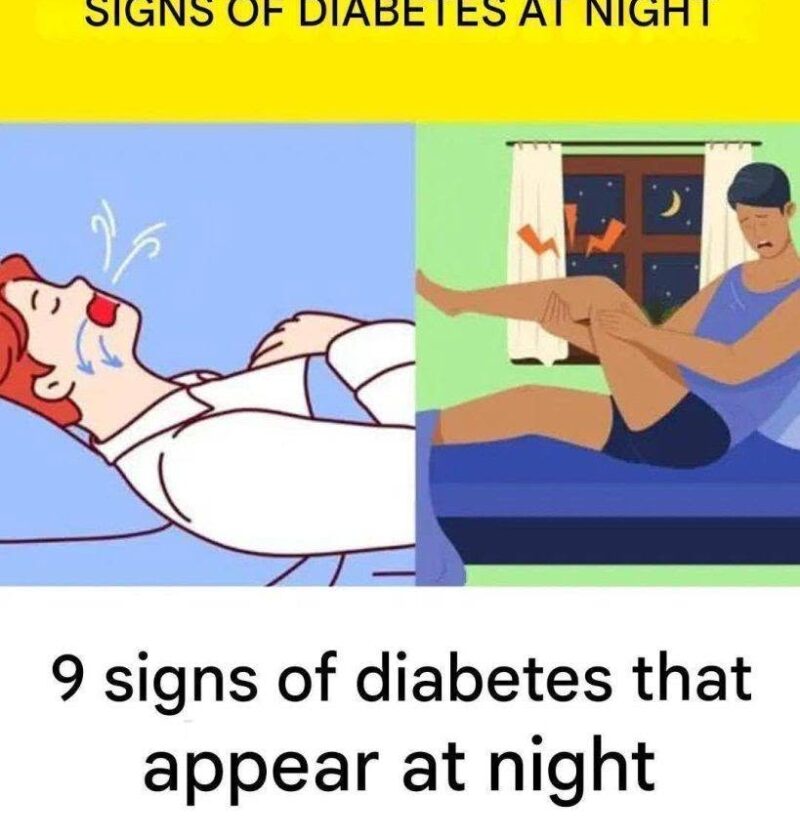
1. Frequent urination during the night (nocturia)
High blood sugar causes the kidneys to remove excess glucose through urine, leading to repeated nighttime bathroom trips.
2. Excessive thirst
Because frequent urination causes fluid loss, you may wake up feeling unusually thirsty or need to keep water by your bed.
3. Night sweats
Low blood sugar during sleep (more common in people already treated for diabetes) can cause sweating, damp sheets, and restless sleep.
4. Restless or poor-quality sleep
Blood sugar fluctuations may contribute to waking frequently, difficulty staying asleep, or feeling unrefreshed in the morning.
5. Leg cramps
Diabetes can affect circulation and nerve function, sometimes causing painful nighttime leg cramps.
6. Tingling, burning, or numbness in the feet
Nerve damage (diabetic neuropathy) often becomes more noticeable at night when there are fewer distractions.
7. Increased hunger, especially late at night
When the body cannot effectively use glucose for energy, you may feel unusually hungry even after eating.
8. Dry mouth
Dehydration from elevated blood sugar levels can cause a persistently dry mouth, particularly overnight.
9. Fatigue despite a full night’s sleep
Even if you sleep for many hours, poorly controlled blood sugar can leave you feeling exhausted upon waking.
When to seek medical advice
Consider making an appointment with a healthcare professional if you have:
- Frequent nighttime urination plus excessive thirst
- Unexplained weight loss
- Blurred vision
- Persistent fatigue
- Slow-healing cuts or frequent infections
- Tingling or numbness in your hands or feet
These symptoms may be associated with Type 1 Diabetes or Type 2 Diabetes, but other medical conditions can cause similar symptoms. A simple blood glucose test can help determine the cause.
If you’re experiencing any of these symptoms, tell me which ones you have, and I can explain how strongly they are associated with diabetes and what tests are typically recommended.