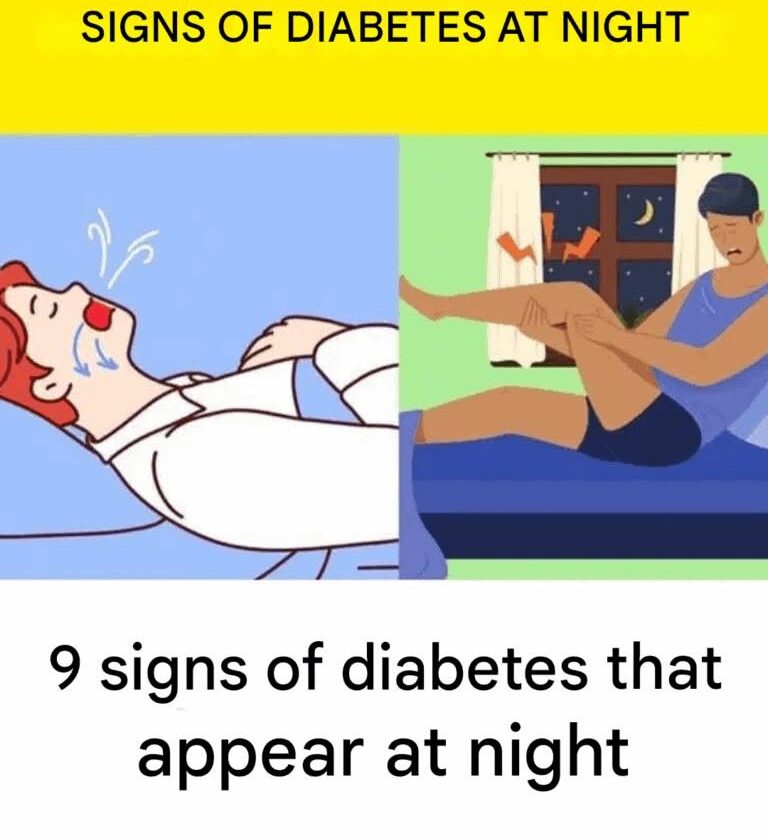
1. Waking up often to urinate
High blood sugar can cause the kidneys to remove extra glucose through urine, which may increase urination—especially at night.
2. Excessive thirst at night
Frequent urination can lead to fluid loss and increased thirst.
3. Night sweats
Some people with diabetes experience sweating episodes, particularly if blood sugar drops too low during sleep.
4. Restless sleep or frequent waking
Blood sugar fluctuations may contribute to discomfort, thirst, or the need to urinate.
5. Increased hunger, especially after waking
Low blood sugar episodes or unstable glucose levels may leave some people feeling unusually hungry.
6. Tingling, burning, or numbness in the feet
Nerve damage related to diabetes (diabetic neuropathy) can cause symptoms that are more noticeable at night.
7. Slow-healing cuts or skin problems
High blood sugar over time can affect circulation and the body’s ability to repair tissues.
8. Blurred vision
Changes in blood glucose can temporarily affect the lens of the eye, sometimes causing fluctuating vision.
9. Fatigue despite a full night’s sleep
Poor sleep from frequent urination or blood sugar changes can leave a person tired during the day.
When to consider a diabetes check
It is especially important to get checked if you have:
- Several of these symptoms together
- Increased thirst and urination
- Unexplained weight loss
- A family history of diabetes
- High blood pressure or other risk factors
A simple blood test, such as fasting blood glucose or HbA1c, can help determine whether blood sugar levels are in a healthy range. Symptoms alone cannot diagnose diabetes.