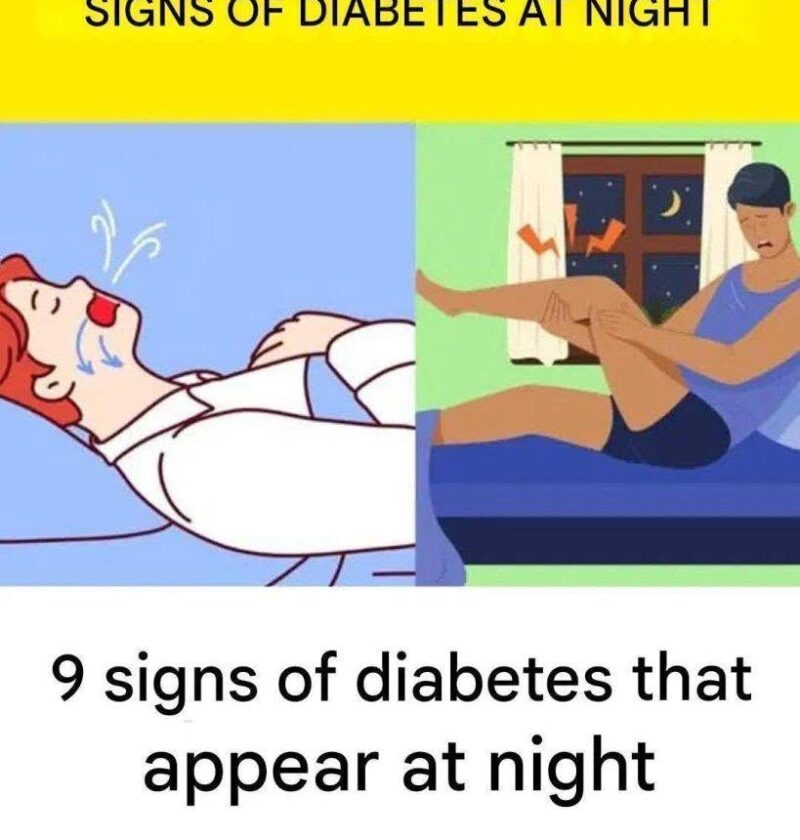
9 Signs of Diabetes That May Appear at Night
Diabetes can sometimes cause symptoms that become more noticeable during the night. These signs happen because high blood sugar levels can affect fluid balance, nerves, sleep patterns, and the body’s energy use.
1. Frequent nighttime urination
Needing to wake up several times to urinate (nocturia) can occur when excess glucose in the blood causes the kidneys to remove more water.
2. Excessive thirst at night
Waking up with a very dry mouth or strong thirst may be linked to fluid loss from frequent urination.
3. Night sweats
Some people with diabetes experience sweating during sleep, especially during episodes of low blood sugar (hypoglycemia).
4. Trouble sleeping
Blood sugar fluctuations can contribute to restlessness, frequent waking, or difficulty staying asleep.
5. Tingling, burning, or numbness in the feet
Diabetes-related nerve damage (diabetic neuropathy) often affects the feet and may feel worse at night when there are fewer distractions.
6. Increased hunger at night
Low blood sugar or poor glucose regulation can sometimes trigger sudden hunger, even after eating.
7. Blurred vision when waking up
Changes in blood sugar levels can temporarily affect the shape of the eye’s lens, causing blurry vision.
8. Slow-healing cuts or itchy skin
High blood sugar can affect circulation and the immune system, which may contribute to skin problems.
9. Unexplained fatigue during the day
Poor sleep caused by nighttime symptoms may lead to daytime tiredness, low energy, and difficulty concentrating.
When to seek medical advice
If you notice several of these symptoms—especially frequent urination, unusual thirst, unexplained weight changes, numbness, or persistent fatigue—it is worth discussing them with a healthcare professional and considering a blood glucose check.
Important: These symptoms do not always mean diabetes; they can also occur with other conditions. Only proper testing can confirm a diagnosis.