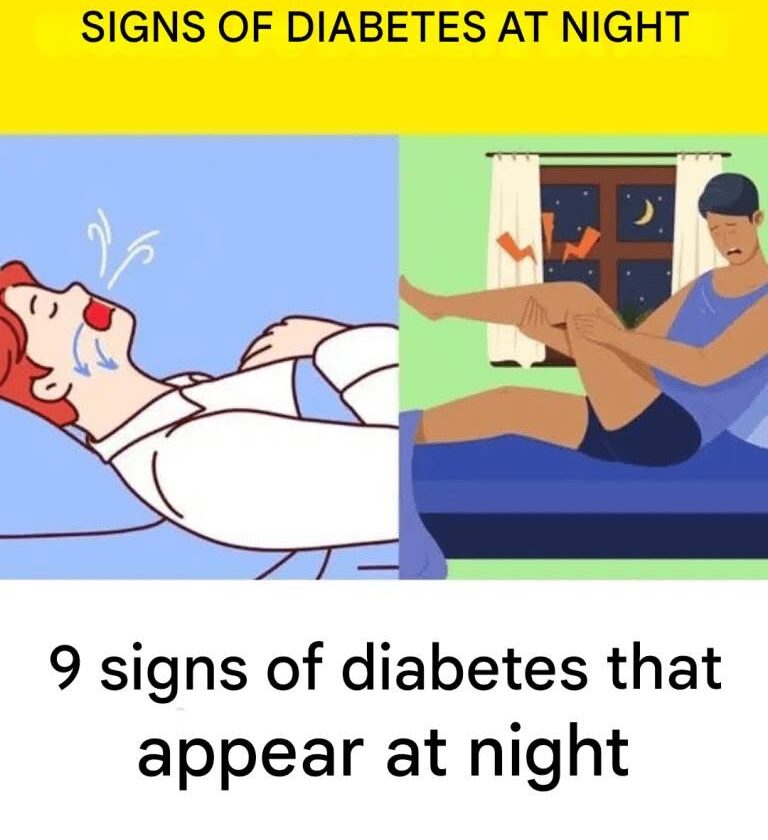
That headline is another clickbait-style claim. Diabetes does not have special “night-only signs,” but some symptoms can become more noticeable at night because of how blood sugar fluctuates during sleep.
We’re talking about Diabetes mellitus.
🌙 Why symptoms may show up at night
At night:
- You’re not eating, so blood sugar regulation changes
- Hormones that control glucose shift during sleep
- You’re more aware of discomfort in a quiet environment
So symptoms can seem worse at night, but they are not exclusive to nighttime.
⚠️ Possible night-time symptoms linked to diabetes
1. Frequent urination at night
- Waking up multiple times to urinate
- Happens when blood sugar is high and kidneys remove excess glucose
2. Excessive thirst (especially at night)
- Dry mouth
- Waking up thirsty repeatedly
3. Night sweats
- Can occur during blood sugar drops (hypoglycemia) or fluctuations
4. Restless sleep or insomnia
- Blood sugar swings can disrupt sleep quality
5. Nighttime hunger
- Sudden hunger pangs during the night
6. Tingling or burning in feet
- Nerve irritation (diabetic neuropathy)
- Often more noticeable when lying down
7. Leg cramps at night
- Can be linked to nerve or circulation issues
8. Fatigue upon waking
- Poor sleep quality due to glucose instability
9. Blurry vision in the morning
- Temporary fluid shifts in the eye due to blood sugar changes
🧠 Important reality check
These symptoms:
- are not specific to diabetes alone
- can also be caused by:
- dehydration
- stress or anxiety
- kidney issues
- sleep disorders
- medication effects
So you cannot diagnose diabetes based on night symptoms alone.
🧪 How diabetes is actually diagnosed
Doctors rely on blood tests like:
- fasting blood glucose
- HbA1c (long-term sugar control)
- glucose tolerance tests
🚨 When to get checked
Consider testing if you have:
- frequent urination + excessive thirst
- unexplained fatigue
- weight loss without trying
- recurring infections or slow healing
🧾 Bottom line
Night symptoms can sometimes be clues, but Diabetes mellitus cannot be reliably identified just from nighttime signs. Diagnosis always requires proper blood testing.
If you want, I can tell you a simple checklist to distinguish normal nighttime waking from possible blood sugar problems.