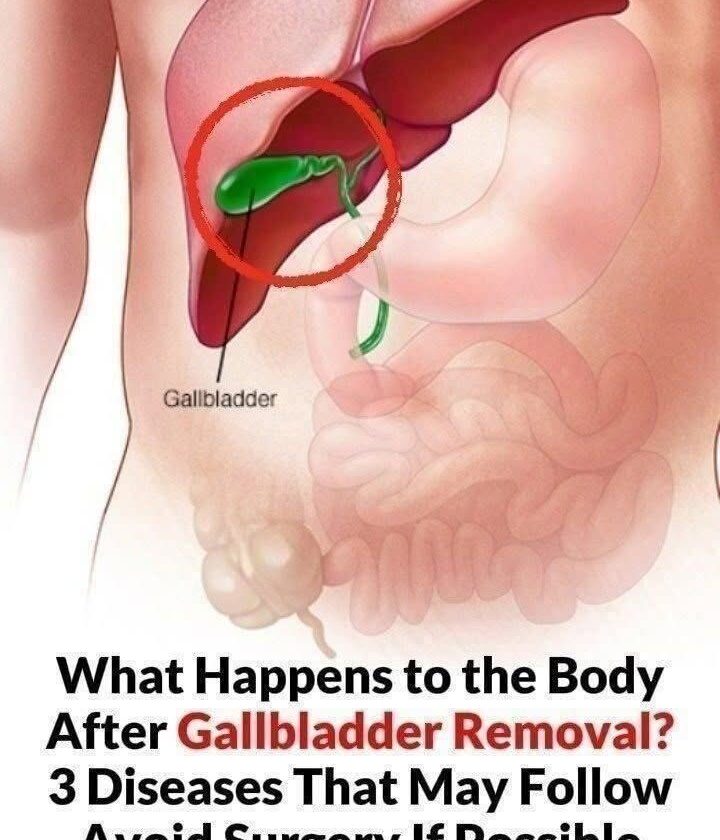
After Gallbladder Removal: 3 Conditions You Could Develop — Why You Should Avoid the Surgery When Possible
Headlines like this can be misleading. Gallbladder removal (cholecystectomy) can have side effects, but it is often the recommended treatment for painful gallstones, repeated inflammation, or complications. For many people, the benefits outweigh the risks.
1. Digestive Changes
Without a gallbladder, bile flows continuously from the liver into the small intestine instead of being stored and released during meals.
Some people may experience:
- Diarrhea or loose stools
- Bloating
- Gas
- Difficulty tolerating very fatty foods
These symptoms are often mild and improve over weeks or months.
2. Post-Cholecystectomy Syndrome
A small percentage of people continue to have digestive symptoms after surgery, sometimes referred to as post-cholecystectomy syndrome.
Symptoms may include:
- Upper abdominal pain
- Indigestion
- Nausea
- Bloating
- Diarrhea
These symptoms can have several causes, including bile duct problems, remaining gallstones, or unrelated digestive conditions.
3. Bile Acid Diarrhea
Some people develop diarrhea because bile enters the intestine continuously instead of being released mainly during meals. This can usually be managed with diet changes or medications that bind bile acids.
Should You Avoid Gallbladder Surgery?
Not necessarily. Whether surgery is appropriate depends on your specific condition.
Doctors often recommend gallbladder removal when there is:
- Repeated painful gallstone attacks
- Acute gallbladder inflammation (cholecystitis)
- Gallstones causing pancreatitis
- Blocked bile ducts
- A high risk of serious complications
In these situations, delaying surgery can increase the risk of severe infection or other complications.
If gallstones are found without symptoms, surgery is often not recommended unless there are specific risk factors.
Supporting Recovery
After surgery, many people benefit from:
- Eating smaller, more frequent meals at first
- Gradually reintroducing fats rather than eating large, high-fat meals
- Staying hydrated
- Following the advice of their surgeon or healthcare team
Bottom line
Gallbladder removal can lead to digestive changes in some people, but it is also a well-established treatment that often relieves symptoms and prevents serious complications. Rather than avoiding surgery in all cases, the decision should be made with a healthcare professional based on your symptoms, test results, and overall health.