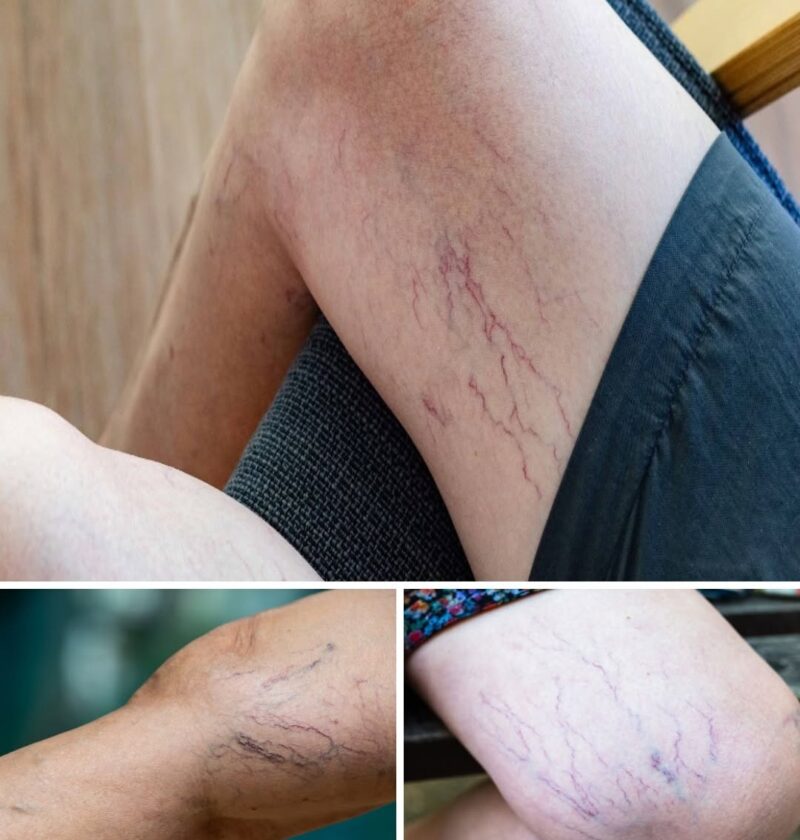
Here’s what it usually means:
1. Normal visible veins (very common)
For many people, especially if they have:
- Fair or thin skin
- Low body fat
- Long periods of standing
- Warm weather
Veins can look blue, purple, or greenish because blood in veins appears darker through the skin.
This is often completely harmless.
2. Early or mild varicose veins
Sometimes purple, bulging, or twisted veins may indicate early signs of:
Varicose veins
This happens when vein valves weaken and blood pools in the legs.
Possible symptoms:
- Aching or heaviness in legs
- Swelling at the end of the day
- Visible raised or twisted veins
3. Chronic venous insufficiency (more advanced)
In some cases, visible purple veins can be part of:
Chronic venous insufficiency
This means blood is not flowing back to the heart efficiently.
Possible signs:
- Swollen ankles
- Skin darkening near ankles
- Itching or discomfort
- Worsening symptoms when standing long hours
4. Less common causes
Occasionally, visible veins may be linked to:
- Pregnancy (increased blood volume and pressure)
- Aging (weaker vein walls)
- Hormonal changes
- Previous leg injury
When to be concerned
You should get checked if you notice:
- Painful or rapidly growing veins
- Skin ulcers or dark patches
- One leg swelling more than the other
- Sudden changes in appearance
Simple ways to help vein health
- Walk regularly to improve circulation
- Avoid standing or sitting too long
- Elevate legs when resting
- Stay hydrated
- Wear compression stockings if recommended
Bottom line
Purple veins on the legs most often mean normal visible veins or mild circulation changes, not something about your personality or identity. In some cases, they can be an early sign of vein conditions like Varicose veins, which are manageable, especially when caught early.
If you want, tell me whether the veins are flat, bulging, or painful—I can help you figure out whether it sounds normal or worth checking.