That kind of line is another clickbait setup—it’s usually trying to lead you into a claim like “increases weight,” “increases mucus,” or “increases sugar,” depending on the source.
Here’s what the evidence actually says.
Eating bananas in the evening: what really happens
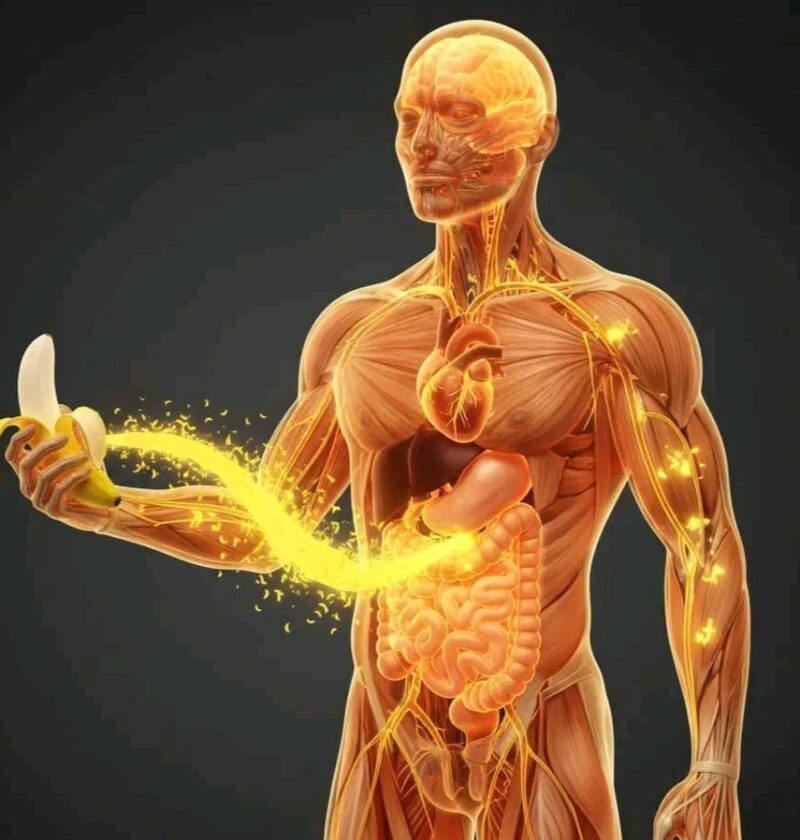
Banana is a nutrient-dense fruit containing potassium, fiber, vitamin B6, and natural sugars. Eating it in the evening does not create a special harmful effect just because of timing.
Your body doesn’t “turn bananas into fat at night.” It uses calories the same way regardless of the clock.
Common claims vs reality
❌ “Increases weight if eaten at night”
False. Weight gain depends on total daily calories, not timing. A banana is ~90–120 calories.
❌ “Causes sugar spikes only at night”
It can raise blood sugar slightly (like any carb), but not uniquely at night. In fact, fiber helps slow absorption.
❌ “Increases mucus or congestion”
No good scientific evidence supports this.
What bananas can do in the evening (real effects)
✔ May support sleep in some people
- Contain magnesium and potassium (muscle relaxation)
- Provide tryptophan (linked to melatonin pathways)
✔ Can reduce late-night cravings
- Fiber helps you feel full
- Can replace unhealthy snacks
✔ Gentle on the stomach
- Easy to digest for most people
When to be a bit careful
- If you have diabetes, portion size matters (like all fruit)
- If you have kidney disease, potassium intake may need monitoring
- If eating late always leads to overeating, timing habits matter more than the banana itself
Bottom line
Eating a banana in the evening is neither harmful nor fattening by itself. It’s just a normal fruit snack—the effect depends on your overall diet, not the clock.
If you want, I can break down other viral “food timing myths” (like milk at night, rice after 6 pm, or fruit after meals).