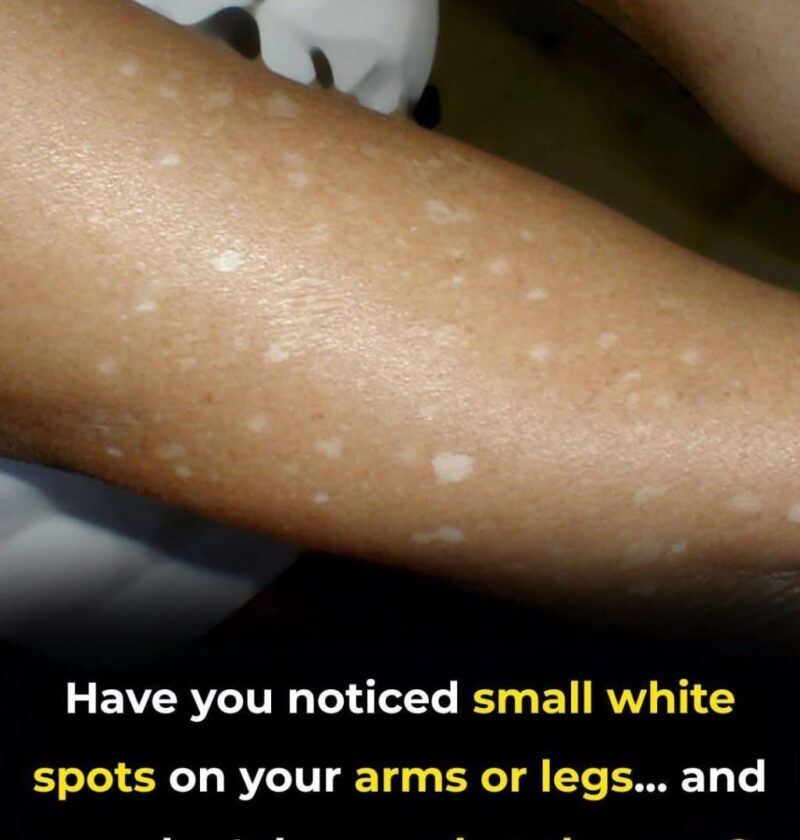
That kind of message is another classic “curiosity hook” post. The truth is, small white spots on arms or legs can have several different causes, most of them not dangerous—but some do need evaluation.
Here are the most common explanations a specialist would usually consider:
🟤 1. Idiopathic guttate hypomelanosis (very common)
Small white “sun spots,” especially in adults.
- Flat, round white patches
- Common on arms and legs
- Linked to sun exposure and aging
- Harmless, cosmetic only
⚪ 2. Vitiligo
A condition where skin loses pigment.
- Sharp white patches that may slowly spread
- Can appear anywhere on the body
- Related to immune system changes affecting pigment cells
🌿 3. Fungal infection (tinea versicolor)
Caused by yeast on the skin.
- Light or white patches
- Mild itching sometimes
- More noticeable after sun exposure
- Common in hot/humid climates
☀️ 4. Post-inflammatory hypopigmentation
Skin becomes lighter after irritation or injury.
- Happens after eczema, acne, scratches, or rashes
- Usually fades slowly over time
🧬 5. Dry skin or eczema
- Can cause uneven pigmentation
- Often accompanied by dryness, itching, or rough texture
🚨 When to get checked
You should see a dermatologist if:
- Spots are spreading quickly
- Borders are very clear and expanding
- There is itching, redness, or scaling
- You are unsure what caused them
🧠 Bottom line
Most small white spots are benign skin pigment changes or mild fungal conditions, but persistent or spreading patches should be evaluated to rule out Vitiligo or fungal infection.
If you want, you can describe what the spots look like (flat, itchy, spreading, size), and I can help narrow it down more accurately.