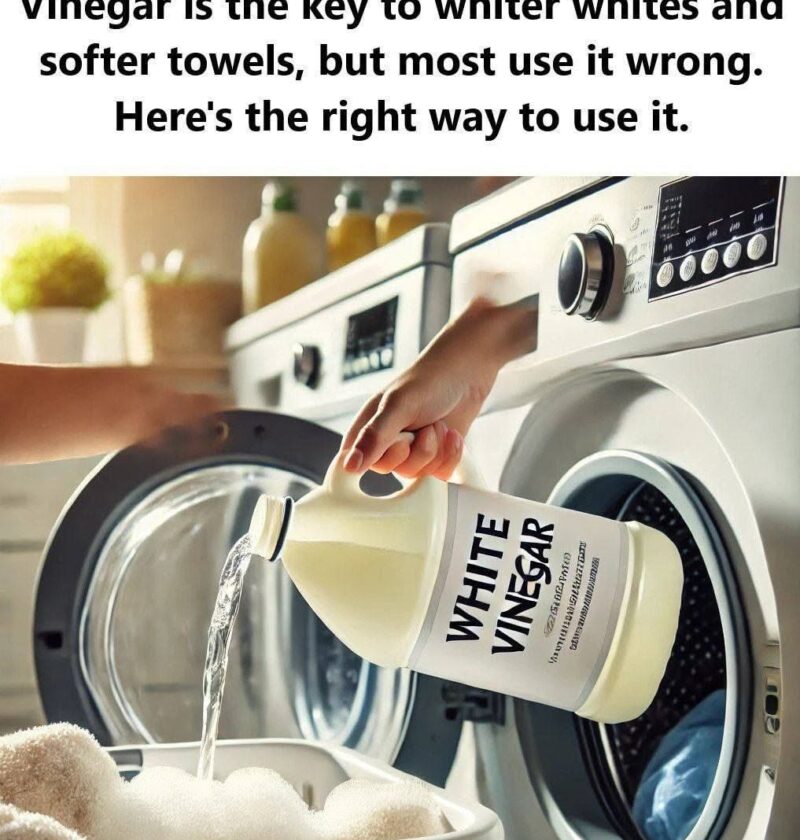
That headline is half true, half exaggerated. Vinegar can help laundry, but it’s not a miracle “whitening agent,” and using it incorrectly can actually reduce cleaning effectiveness.
Here’s what it really does—and the correct way to use it.
🧺 What vinegar actually helps with in laundry
✔️ Softens towels
- Breaks down detergent residue and mineral buildup
- Makes towels feel less stiff
✔️ Reduces odors
- Helps remove musty or sweat smells
✔️ Helps with mild residue buildup
- Especially in hard water areas
⚠️ What vinegar does NOT do
- It does not truly bleach or whiten like chlorine bleach
- It will not remove deep stains alone
- It should not replace detergent
🧼 The RIGHT way to use vinegar
1. As a rinse aid (best method)
- Add ½ cup white vinegar in the fabric softener compartment
- Do NOT mix with detergent in the wash cycle
2. For towels
- Wash normally with detergent first
- Add vinegar in the rinse cycle only
- Helps restore softness over time
3. For odor-heavy clothes
- Pre-soak in water + 1 cup vinegar for 30–60 minutes
- Then wash normally
❌ Common mistakes people make
- Mixing vinegar directly with bleach → dangerous fumes
- Using too much vinegar → can weaken fabric over time
- Replacing detergent completely → clothes won’t clean properly
- Using it every single wash → unnecessary
🧠 Why towels become rough in the first place
- Detergent buildup
- Hard water minerals
- Overuse of fabric softener (it can coat fibers)
Vinegar helps remove those residues, which is why towels feel softer afterward.
🧭 Bottom line
Vinegar is a useful laundry helper, not a whitening solution. It works best as a rinse-cycle softener and deodorizer, not a detergent replacement.
If you want, I can show you a simple laundry routine to keep towels soft and white without damaging fabric or color.