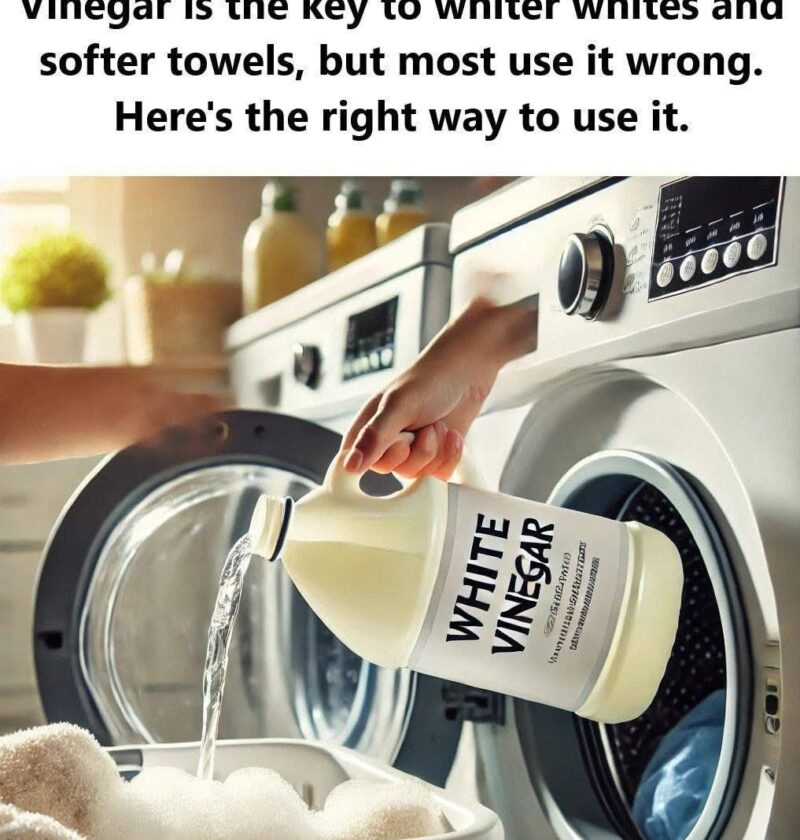
The claim is partly true, but exaggerated.
Vinegar can help laundry—but it doesn’t “whiten like bleach” or magically restore all fabrics. Its real value is removing residue, odors, and mineral buildup, which can make clothes look and feel cleaner.
🧺 What vinegar actually does in laundry
✔️ Helps soften towels
- Breaks down detergent and hard-water buildup
- Restores a softer feel over time
✔️ Reduces odors
- Helps neutralize musty or sweat smells
✔️ Removes residue
- Useful in areas with hard water
⚠️ What vinegar does NOT do
- It does NOT truly bleach or whiten heavily stained fabric
- It does NOT remove deep oil or dye stains
- It is NOT a full detergent replacement
🧼 The RIGHT way to use vinegar
1. Use it in the rinse cycle only
- Add ½ cup white vinegar
- Put it in the fabric softener compartment
- Do NOT mix with detergent
2. For towels (best use case)
- Wash towels with regular detergent first
- Run a second rinse with vinegar
- Dry completely (sun or dryer)
✔️ Result: softer, fresher towels
3. For odor removal
- Soak clothes in warm water + 1 cup vinegar for 30–60 minutes
- Then wash normally
❌ Common mistakes people make
- Mixing vinegar with bleach → toxic gas risk
- Using too much vinegar → fabric wear over time
- Expecting instant whitening → unrealistic
- Replacing detergent completely → clothes won’t clean properly
🧠 Why towels get rough or dull
- Detergent buildup
- Hard water minerals
- Overuse of fabric softeners (they coat fibers)
Vinegar helps by stripping that buildup—not by “bleaching.”
🧭 Bottom line
Vinegar is a maintenance helper, not a whitening miracle. It works best for softness and odor control, especially for towels.
If you want, I can give you a step-by-step routine to keep whites bright without bleach or damage.