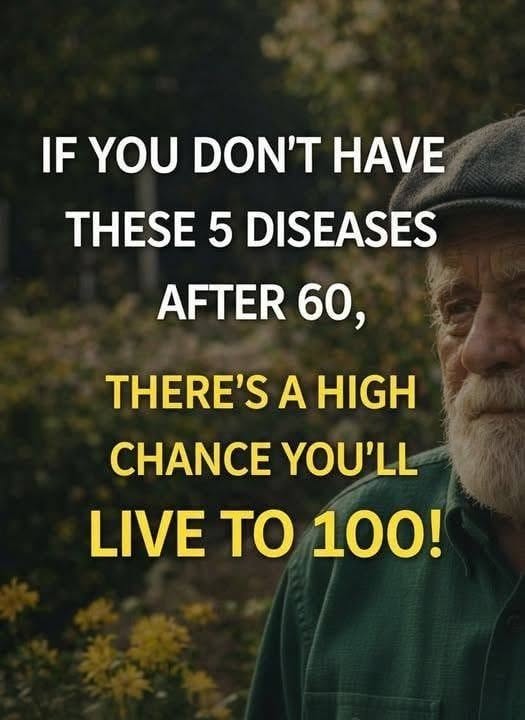
That claim is overstated and misleading.
Reaching age 60 without certain diseases can improve your odds of living longer—but it does not guarantee a high chance of reaching 100. Longevity depends on many factors: genetics, lifestyle, environment, healthcare, and random chance.
Why the claim is misleading
- There is no validated rule that “no 5 diseases = living to 100.”
- Many people live into their 90s or 100s with chronic conditions.
- Some people die earlier despite being disease-free at 60 due to accidents, infections, cancers, or cardiovascular events.
What does matter more for long life
Instead of a fixed list of “5 diseases,” research on longevity consistently highlights broader health patterns:
1. Cardiovascular health
Avoiding or controlling conditions like hypertension and heart disease is strongly linked to longer life.
2. Metabolic health
Good control of blood sugar and weight reduces risk from conditions like diabetes.
3. Cancer risk factors
Not smoking and limiting alcohol significantly lowers cancer-related mortality risk.
4. Brain health and function
Maintaining cognitive health and avoiding severe neurological decline is important for healthy aging.
5. Physical function and independence
Ability to walk, move, and stay active into older age is a strong predictor of longevity.
What research actually shows
Studies of “healthy aging” and centenarians find that:
- Genetics play a role, but not the majority
- Lifestyle habits (diet, activity, smoking avoidance) matter more
- Social connection and stress levels also strongly influence lifespan
- There is no single “disease-free checklist” that guarantees extreme longevity
Bottom line
Being free of major chronic diseases at 60 is a good sign, but it is not a guarantee of reaching 100. Longevity is a probability game, not a fixed formula.
If you want, I can list the strongest scientifically proven habits linked to living longer, not clickbait-style disease lists.